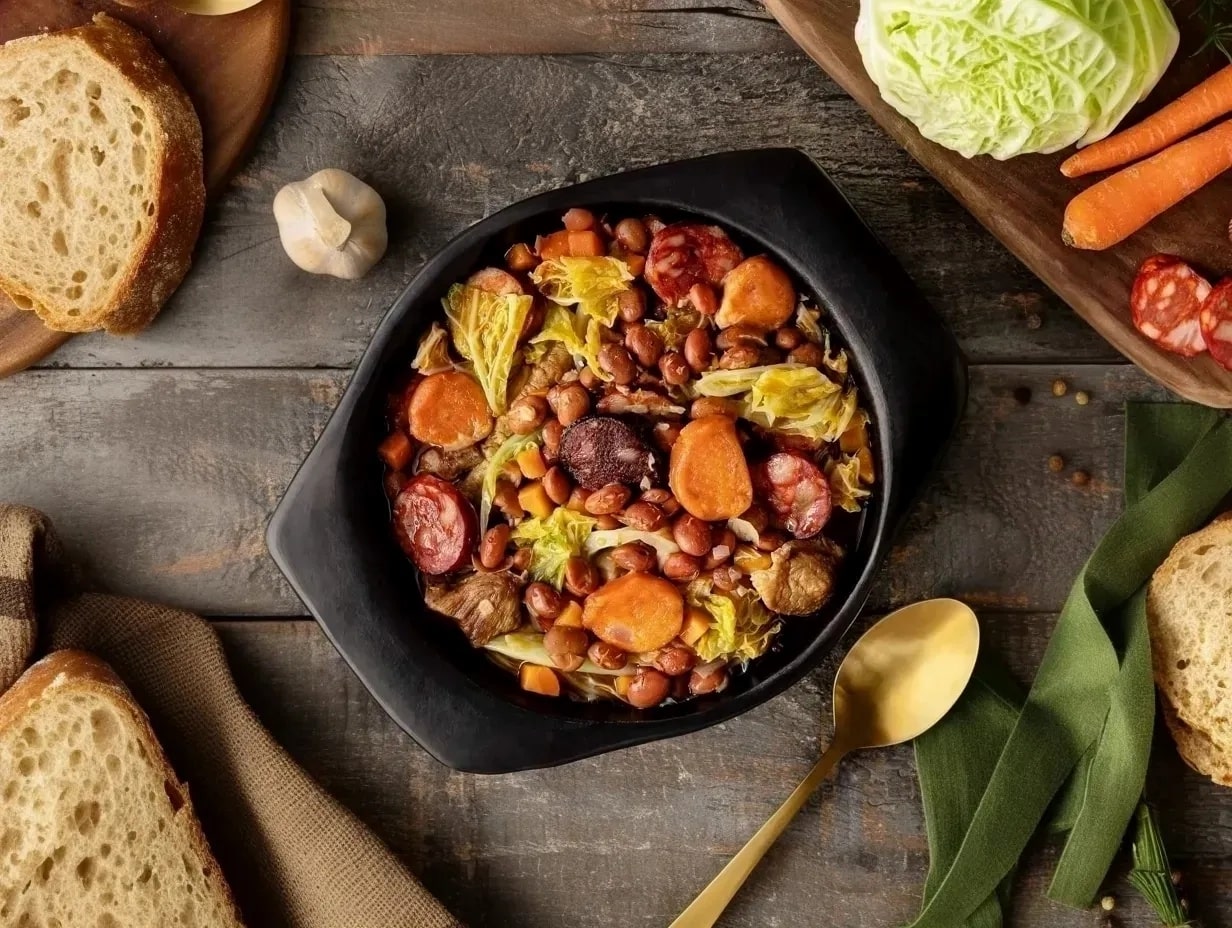
Feijoada transmontana is the feijoada of Trás-os-Montes, where winters are long, smokehouses are serious, and bean stews carry morcela, chouriço, pork belly and ribs without apology. This is the mountain version, and it holds nothing back.
The blood sausage is the regional signature — it melts partly into the stew, deepening everything — alongside the double paprika (sweet and smoked) that colors the pot brick-red.
If the general Portuguese feijoada (also on the site) is the family of dishes, this is its boldest member. Serve it with rice or broa, collard greens alongside, and no plans for the afternoon.
Feijoada Transmontana Recipe
What you need
Ingredients
- 1 pound dried white beans (or 2 cans, drained and rinsed)
- 2 tablespoons olive oil
- 1 medium onion, chopped
- 4 garlic cloves, minced
- 1 large tomato, chopped
- 1 pound pork belly, cut into chunks
- 1 pound pork ribs, cut small
- 2 chouriço sausages, sliced
- 1 morcela (blood sausage), sliced
- 2 bay leaves
- 1 teaspoon sweet paprika
- ½ teaspoon smoked paprika
- 4 cups water
- Salt and pepper
- A small bunch parsley, chopped
- 1 cup shredded collard greens (optional, for serving)
Cook along
Instructions
- If using dried beans: soak overnight, then cook until tender, 1 to 1½ hours. Set aside. (Skip with canned.)
- Heat the olive oil and sauté the onion and garlic 3 to 4 minutes.
- Add the tomato, both paprikas and the bay leaves, and cook 5 minutes, until softened.
- Brown the pork belly and ribs on all sides.
- Add the chouriço and morcela, pour in the water, boil, then cover and simmer about 1 hour, stirring occasionally.
- Add the beans and simmer uncovered 20 to 30 minutes, until the flavors fuse and the sauce thickens.
- Season, shower with parsley, and serve hot with rice or broa — collard greens alongside, mountain style.
WhatsApp Channel
Healthy Mediterranean recipes, straight to your phone
No groups, no clutter — just healthy Mediterranean recipes, sent as soon as they're ready. Follow the channel and never miss the next one.
Follow the ChannelEnjoy our recipes? Add Maria’s Cookbook as a preferred source on Google to see more of our content in your search results.