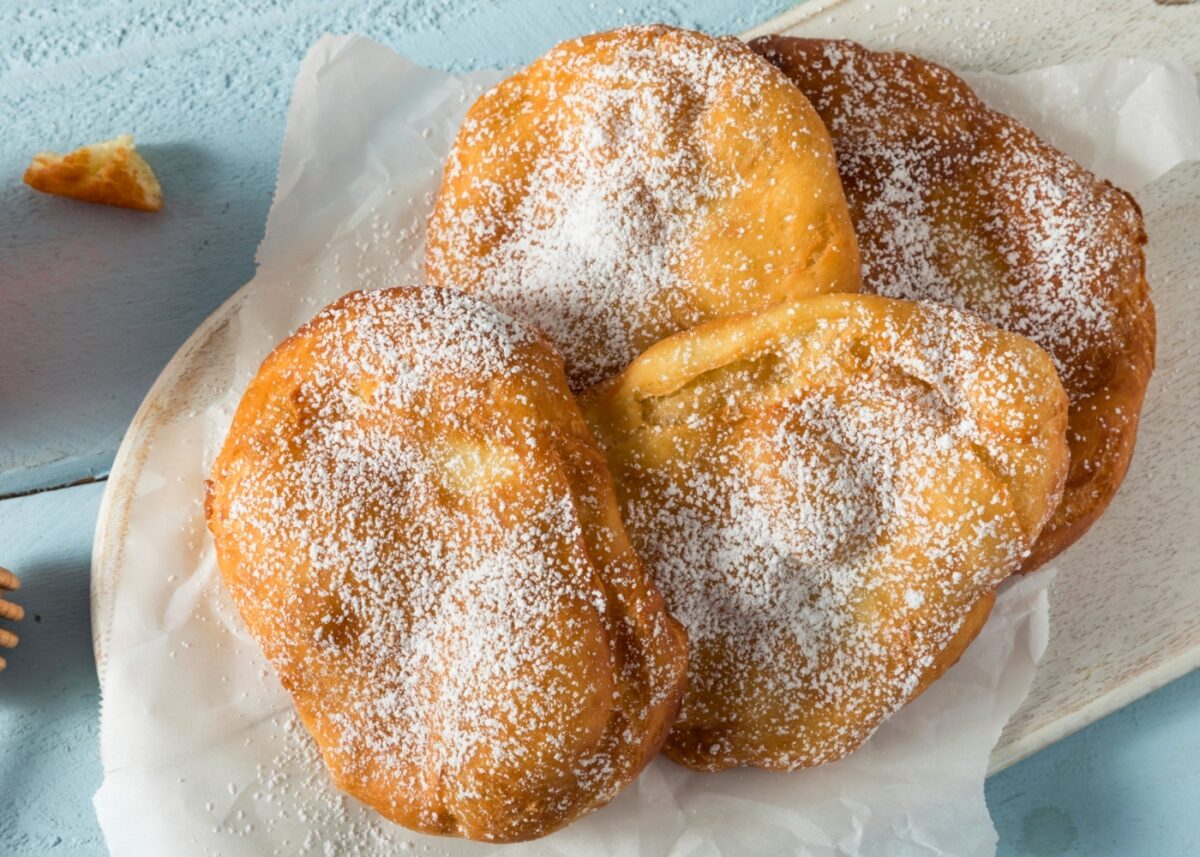
Filhós are the grand matriarchs of the Portuguese Christmas fry-up: pillowy rounds of orange-and-brandy scented dough, stretched thin by hand, fried in olive oil and showered with cinnamon sugar. In many villages, making filhós is a family event, with adults at the oil and children circling the finished pile.
They complete the holy trinity of Portuguese Christmas frying with rabanadas and coscorões (both on the site) — same season, same cinnamon sugar, entirely different souls. Filhós are the soft, yeasted ones, and in many regions pumpkin joins the dough (filhós de abóbora, a Beiras treasure).
The traditional test of a good filhó-maker is stretching each piece over the knee (truly — clean apron required). A well-floured hand does the same job with fewer family legends attached.
Filhós Recipe
Ingredients
- 4 cups all-purpose flour
- 1 packet (2¼ teaspoons) active dry yeast
- ½ cup warm milk
- 3 large eggs
- ¼ cup sugar
- Zest and juice of 1 orange
- 2 tablespoons brandy or aguardente
- 2 tablespoons melted butter
- ½ teaspoon salt
- Olive oil (or neutral oil), for frying
- 1 cup sugar mixed with 1 tablespoon cinnamon, for coating
Instructions
- Dissolve the yeast in the warm milk and let it froth, 5 to 10 minutes.
- Combine the flour, sugar and salt; add the yeast milk, eggs, orange zest and juice, brandy and melted butter, and work into a soft, slightly sticky dough.
- Knead 8 to 10 minutes, cover, and let rise in a warm place until doubled, about 1½ hours.
- Heat 1 inch of oil to 350°F.
- With oiled hands, pull off egg-sized pieces and stretch each into a thin, rustic round — irregular is authentic.
- Fry 1 to 2 minutes per side, until puffed and golden.
- Drain briefly and toss in the cinnamon sugar while warm. Pile high and defend the pile.
Enjoy our recipes? Add Maria’s Cookbook as a preferred source on Google to see more of our content in your search results.