Maria's Cookbook
  • About
  • Contact
  • Recipes
    • Appetizers
    • Bread
    • Breakfast
    • Desserts
    • Drinks
    • Main dishes
    • Salads
    • Sauces
    • Soups
  • About
  • Contact
  • Recipes
    • Appetizers
    • Bread
    • Breakfast
    • Desserts
    • Drinks
    • Main dishes
    • Salads
    • Sauces
    • Soups
No Result
View All Result
Maria's Cookbook
No Result
View All Result
Home Desserts

Folar da Páscoa (portuguese easter bread)

by Maria
July 4, 2026
in Desserts
0 0
0
Folar da Páscoa (portuguese easter bread)

Folar da Páscoa (portuguese easter bread)

1
SHARES
60
VIEWS
Share on FacebookShare on Twitter

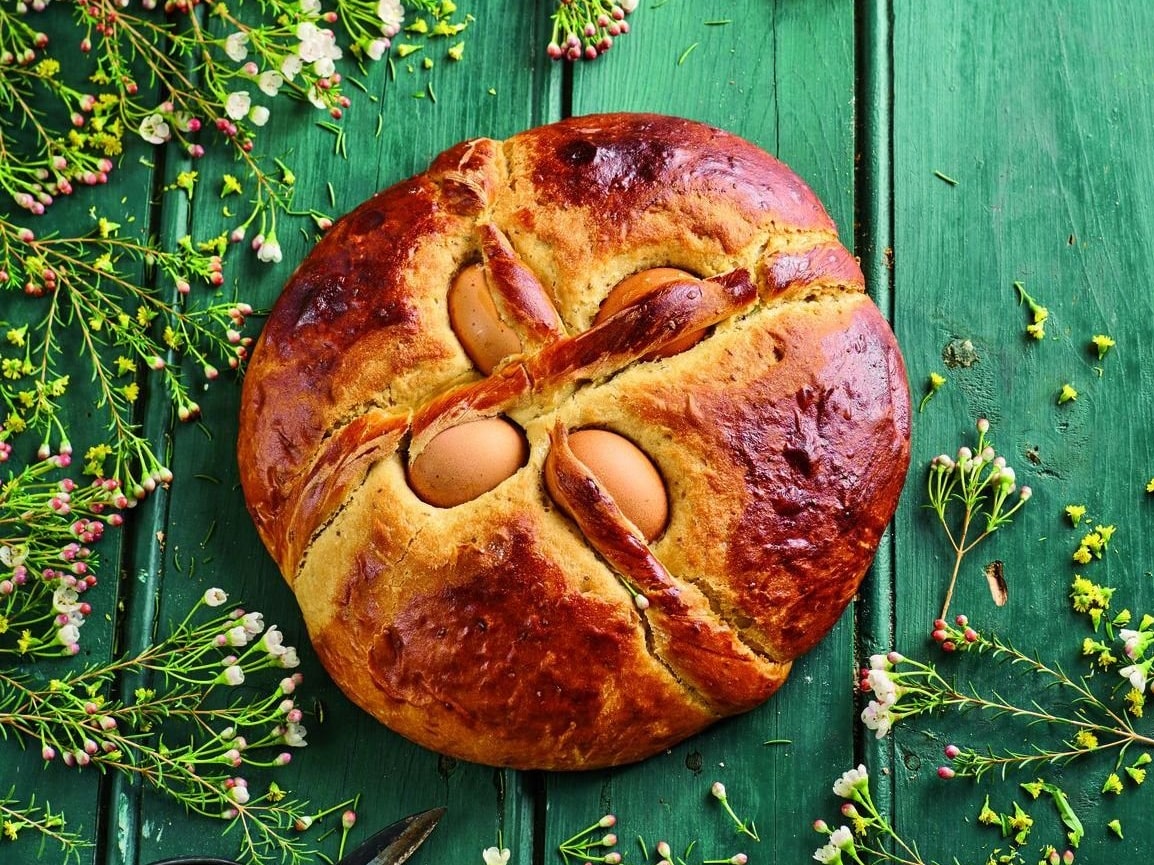
Folar da Páscoa is the sweet bread that means Easter in Portugal: soft, fragrant with cinnamon and orange, and traditionally baked with whole eggs nestled on top. My grandmother made it every year, and I can still smell the bread filling her house while my cousins and I argued over who got to crack the eggs.

The tradition goes back to the Middle Ages, when godchildren offered bread and eggs to their godparents on Easter Sunday as a sign of gratitude — the egg a symbol of life and rebirth, the ring-shaped loaf echoing a crown. Over the centuries the bread grew sweeter and richer, and every region developed its own version: some with dried fruit or nuts, and in the north, famous savory folares stuffed with meats.

My grandmother was from Trás-os-Montes, and this is her recipe, learned from her mother — she baked hers in a wood-fired oven with eggs from her own chickens and always made extra loaves for her many godchildren and neighbors. I have adapted it gently for a modern home kitchen, and I hope it brings a little of her generosity to your Easter table.

Folar da Páscoa Recipe

Prep time: 30 minutes (plus about 2 hours rising) · Cook time: 35 minutes · Total: about 3 hours · Servings: 8 · Calories: ~343 per serving

Ingredients

  • 0.9 oz (25 g) fresh yeast, or 2¼ teaspoons active dry yeast
  • A little warm milk
  • 1 tablespoon sugar
  • 4 cups (17.6 oz) all-purpose flour
  • A pinch of salt
  • 7 tablespoons (3.5 oz) melted butter
  • 3 eggs, beaten
  • Zest and juice of ½ orange
  • ½ teaspoon ground cinnamon
  • Boiled eggs, for decorating (optional)
  • 1 egg yolk mixed with a splash of milk, for brushing

Instructions

  1. Dissolve the yeast in a little warm milk with the tablespoon of sugar and let it activate for 20 minutes.
  2. In a large bowl, mix the flour with the salt and make a well in the middle.
  3. Stir the melted butter, beaten eggs, orange zest and juice and cinnamon into the yeast mixture.
  4. Pour it into the well and knead until you have a smooth dough that no longer sticks to your hands, adding a little more flour or milk as needed.
  5. Shape the dough into a ball, place it in an oiled bowl, cover with a cloth and let it rise in a warm spot until doubled, about 2 hours.
  6. Preheat the oven to 350°F and line a baking sheet with parchment paper.
  7. Divide the dough in two, roll each into a long rope, braid them together and join the ends into a crown.
  8. Place the crown on the baking sheet, nestle in the boiled eggs if using, and brush the dough with the yolk-milk mixture.
  9. Bake for about 35 minutes, until golden. Cool on a rack before serving.

Recipe Notes

  • Raisins, nuts, dried fruit or chocolate chips are all welcome additions to the dough.
  • Nutmeg, cardamom or anise (very traditional) can replace or join the cinnamon.
  • My grandmother used lard instead of butter — if you can get good lard, it gives wonderful flavor and texture.
  • Plant-based milk, oil instead of butter, or brown sugar all work if you need substitutions; adjust the liquid as needed.
Tags: folarfolar da páscoa
Previous Post

Bolos lêvedos

Next Post

Codfish with Cream (Portuguese Bacalhau com Natas)

Maria

Maria

Hi, I’m Maria — born in a small village in northern Portugal and now cooking from my kitchen in the USA, where I live with my husband, our two kids and Max the dog. On Maria’s Cookbook I share the recipes I grew up with — from my Trás-os-Montes family table to my grandmother’s Azorean kitchen — along with Mediterranean favorites and dishes I’ve fallen in love with along the way.

Next Post
Codfish with Cream (Portuguese Bacalhau com Natas)

Codfish with Cream (Portuguese Bacalhau com Natas)

Leave a Reply Cancel reply

Your email address will not be published. Required fields are marked *

Recent Posts

  • Filhós (Portuguese Christmas Fritters)
  • Arroz de Feijão Malandrinho (Portuguese Bean Rice)
  • Poncha (Madeiran Honey and Rum Cocktail)
  • Sopa da Pedra (Portuguese Stone Soup)
  • Pastéis de Nata (Portuguese Custard Tarts)

Recent Comments

  1. Susan A on Traditional portuguese roll (papos secos)
  2. Isabella on Toucinho do Céu
  3. Isabella on Portuguese farturas
  4. Maria on Portuguese seafood rice (arroz de marisco)
  5. Maria on Portuguese seafood rice (arroz de marisco)
  • About
  • Contact
  • Privacy Policy

© Maria’s Cookbook · Family recipes from Portugal, the Mediterranean and beyond. All rights reserved.

Welcome Back!

Login to your account below

Forgotten Password?

Retrieve your password

Please enter your username or email address to reset your password.

Log In
No Result
View All Result
  • About
  • Contact
  • Recipes
    • Appetizers
    • Bread
    • Breakfast
    • Desserts
    • Drinks
    • Main dishes
    • Salads
    • Sauces
    • Soups

© Maria’s Cookbook · Family recipes from Portugal, the Mediterranean and beyond. All rights reserved.