
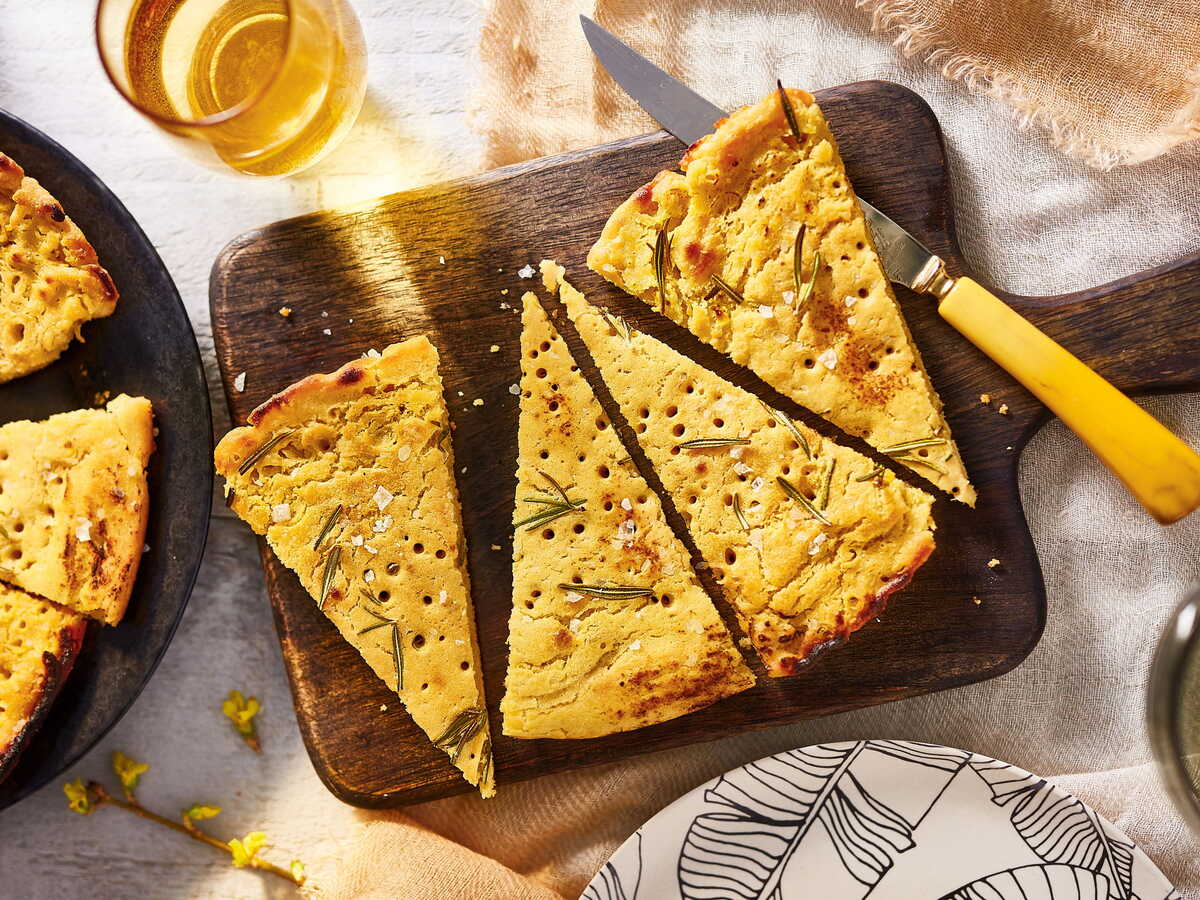
Socca is one of those dishes that makes you rethink what bread even needs to be. In Nice, along the French Riviera, street vendors bake it in enormous copper pans over wood fire until the edges turn dark and crackly while the center stays custardy, then slice it into rough wedges and hand it over wrapped in paper, black pepper the only seasoning most vendors bother with.
The batter is just chickpea flour, water, olive oil, and salt, whisked together and left to rest so the flour fully hydrates, then poured into a screaming-hot oiled pan or skillet and baked or broiled until blistered.
No yeast, no kneading, no gluten at all, which makes it a good bread option for anyone at your table avoiding wheat, though I would never call it a substitute, it is simply its own thing.
If you like the way my Bolo do Caco (recipe on the site) makes a meal feel complete, socca plays a similar role at a French Provencal table, something warm and starchy to tear apart with your hands.
I make this most often in summer, when I do not want the oven cranked for long and a hot skillet on the stovetop or a quick broil does the job just as well. Lucas is suspicious of anything described as a pancake made from beans, but a scatter of flaky salt and a hard sear on the edges usually wins him over by the second bite.
Socca (Nicoise Chickpea Flatbread) Recipe
Prep time: 10 minutes active, plus 1 to 2 hours resting · Cook time: 10 minutes · Total: 1 hour 30 minutes · Servings: 4 · Calories: ~150 per serving
Ingredients
- 1 cup chickpea flour (also called besan or garbanzo bean flour)
- 1 cup water, room temperature
- 3 tablespoons olive oil, divided, plus more for the pan
- 3/4 teaspoon salt
- 1/4 teaspoon ground black pepper
- 1/2 teaspoon fresh rosemary or thyme, chopped (optional)
- Flaky sea salt, for finishing
Instructions
- In a bowl, whisk together the chickpea flour, water, 2 tablespoons of the olive oil, salt, and pepper until completely smooth with no lumps.
- Cover and let the batter rest at room temperature for at least 1 hour, or up to 4 hours, to let the flour fully hydrate; this step is what keeps the finished bread from tasting grainy.
- Preheat the oven to 475 F (or heat the broiler) with a 10-inch cast iron or other oven-safe skillet inside to get very hot, at least 10 minutes.
- Carefully remove the hot skillet, add the remaining 1 tablespoon olive oil, and swirl to coat. Pour in the batter; it should sizzle on contact.
- Bake or broil for 8 to 10 minutes, until the top is set, blistered, and browned in spots, and the edges have pulled away from the pan and turned crisp.
- Scatter with chopped herbs, if using, and flaky salt. Slice into wedges and serve immediately, while still hot and crisp at the edges.
Recipe Notes
- Sourcing tip: chickpea flour is widely available at Indian, Middle Eastern, and Italian grocers (sometimes labeled besan or farina di ceci), and in the gluten-free or international aisle of most large US supermarkets.
- Do not skip the resting time. Batter used right away bakes up gritty rather than smooth and custardy in the center.
- A well-seasoned cast iron pan gives the best crisp edge, but any heavy oven-safe skillet works; just make sure it gets properly hot before the batter goes in.
- Socca is best eaten within minutes of coming out of the oven, it turns rubbery as it cools, so time it to be the last thing you make before serving.
Enjoy our recipes? Add Maria’s Cookbook as a preferred source on Google to see more of our content in your search results.