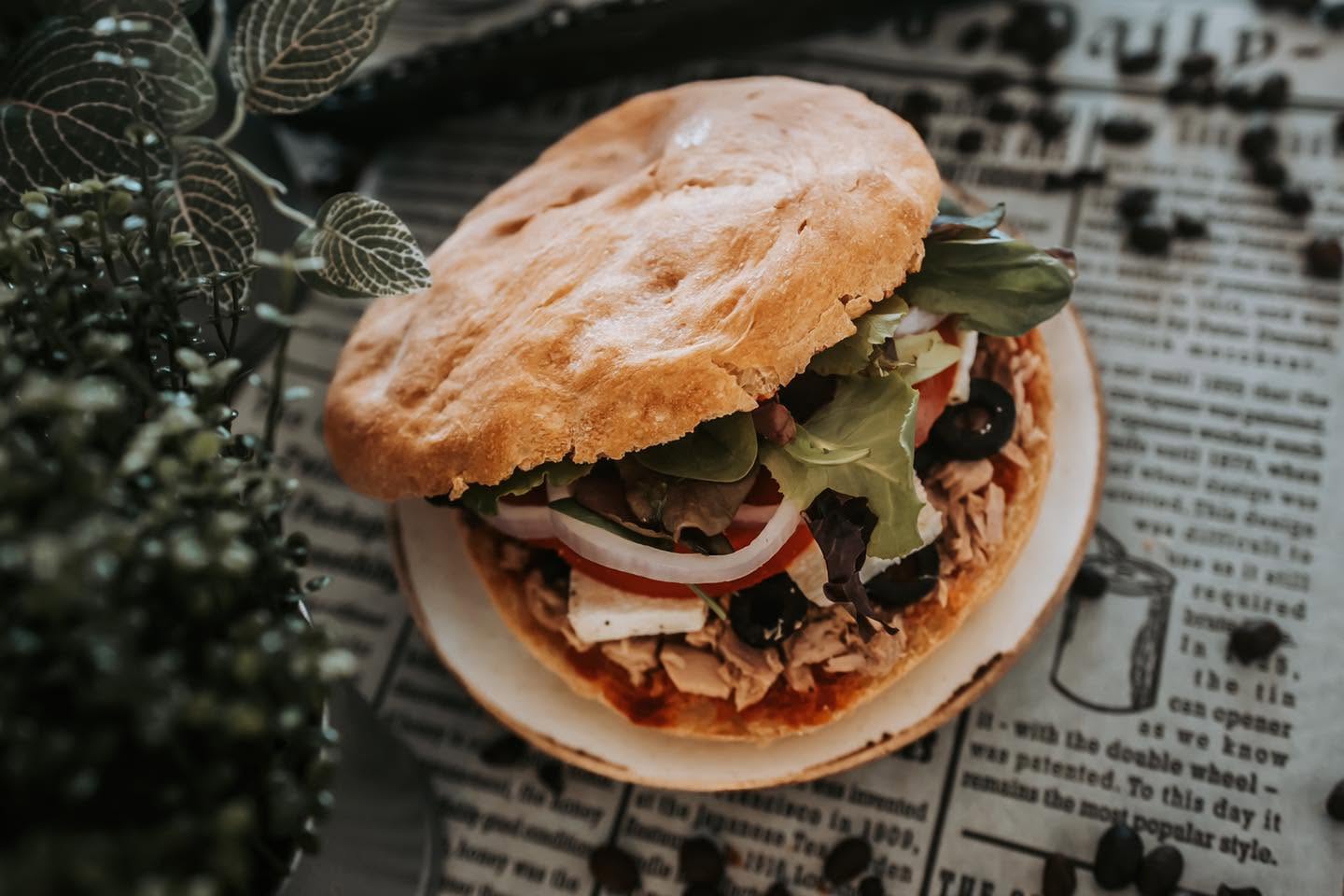
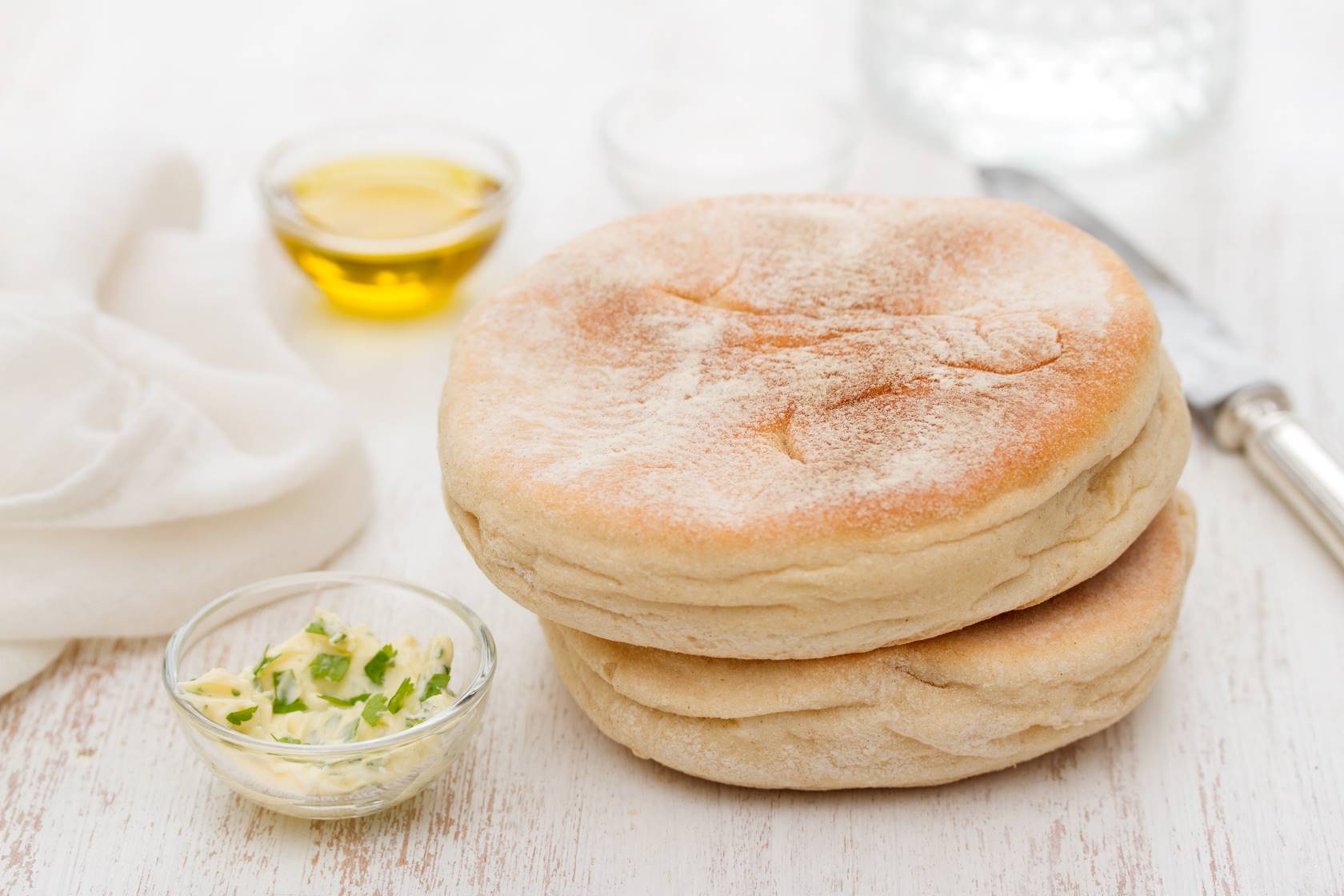
Bolo do caco is Madeira’s signature flatbread, sold hot from street stalls in Funchal and slathered with garlic butter. Traditionally it is cooked on a basalt stone slab (the caco); at home, a cast-iron skillet does the job very well.
Bolo do caco takes its name from the caco, a flat basalt stone that Madeiran farmers traditionally heated over an open fire and used as a griddle. Sweet potato worked into the dough gives the bread a soft chew and a faint sweetness and orange tint, and the second it comes off the heat, it gets split open and slathered with garlicky parsley butter while it is still hot enough to melt straight into the crumb. Street vendors in Funchal still sell it exactly that way, torn apart with your hands, no plate required.
If broa de milho, pão com chouriço, or our papos secos are already in your rotation (recipes on the site), this earns a spot right next to them, just from a different island altogether.
Bolo do Caco Recipe
Ingredients
- For the dough:
- 1 cup mashed sweet potato (about 1 medium, cooked and cooled)
- 3 1/2 cups all-purpose flour, plus more for dusting
- 1 packet (2 1/4 teaspoons) active dry yeast
- 1 cup warm water
- 1 teaspoon sugar
- 1 1/2 teaspoons salt
- 2 tablespoons olive oil
- For the garlic butter:
- 6 tablespoons unsalted butter, softened
- 4 cloves garlic, minced
- 2 tablespoons chopped fresh parsley
- Pinch of salt
Instructions
- In a small bowl, dissolve the sugar and yeast in the warm water and let sit until foamy, about 5 to 10 minutes.
- In a large bowl, mix the flour and salt. Add the mashed sweet potato, olive oil, and the yeast mixture. Mix and knead, by hand or with a mixer fitted with a dough hook, for about 8 minutes, until you have a smooth, slightly sticky dough.
- Place the dough in an oiled bowl, cover, and let rise in a warm spot until doubled, about 1 hour.
- Punch down the dough and divide into 6 equal pieces. Shape each into a flat round disc about 6 inches across and 1/2 inch thick.
- Heat a large cast iron skillet or griddle over medium heat. No oil here, these are cooked dry, the way a stovetop flatbread would be.
- Cook each disc for about 4 to 5 minutes per side, until deeply browned in spots and cooked through. Lower the heat if they are browning too fast before the inside cooks.
- While the bread cooks, mix the softened butter with the garlic, parsley, and a pinch of salt.
- As soon as each bolo do caco comes off the skillet, split it in half horizontally and slather generously with the garlic butter while it is still hot, so it melts straight in.
- Serve immediately, ideally torn apart with your hands rather than sliced.
Enjoy our recipes? Add Maria’s Cookbook as a preferred source on Google to see more of our content in your search results.