This is the soup with the story. A hungry friar walks into a village in Almeirim with nothing but a stone in his bag, tells the townspeople he can make the finest soup they have ever tasted from that stone alone, and then talks them into contributing “just a little” cabbage, then “just a little” sausage, then “just a little” of everything they own, until the stone soup is a full feast for the whole village. Almeirim still calls itself the capital of sopa da pedra.
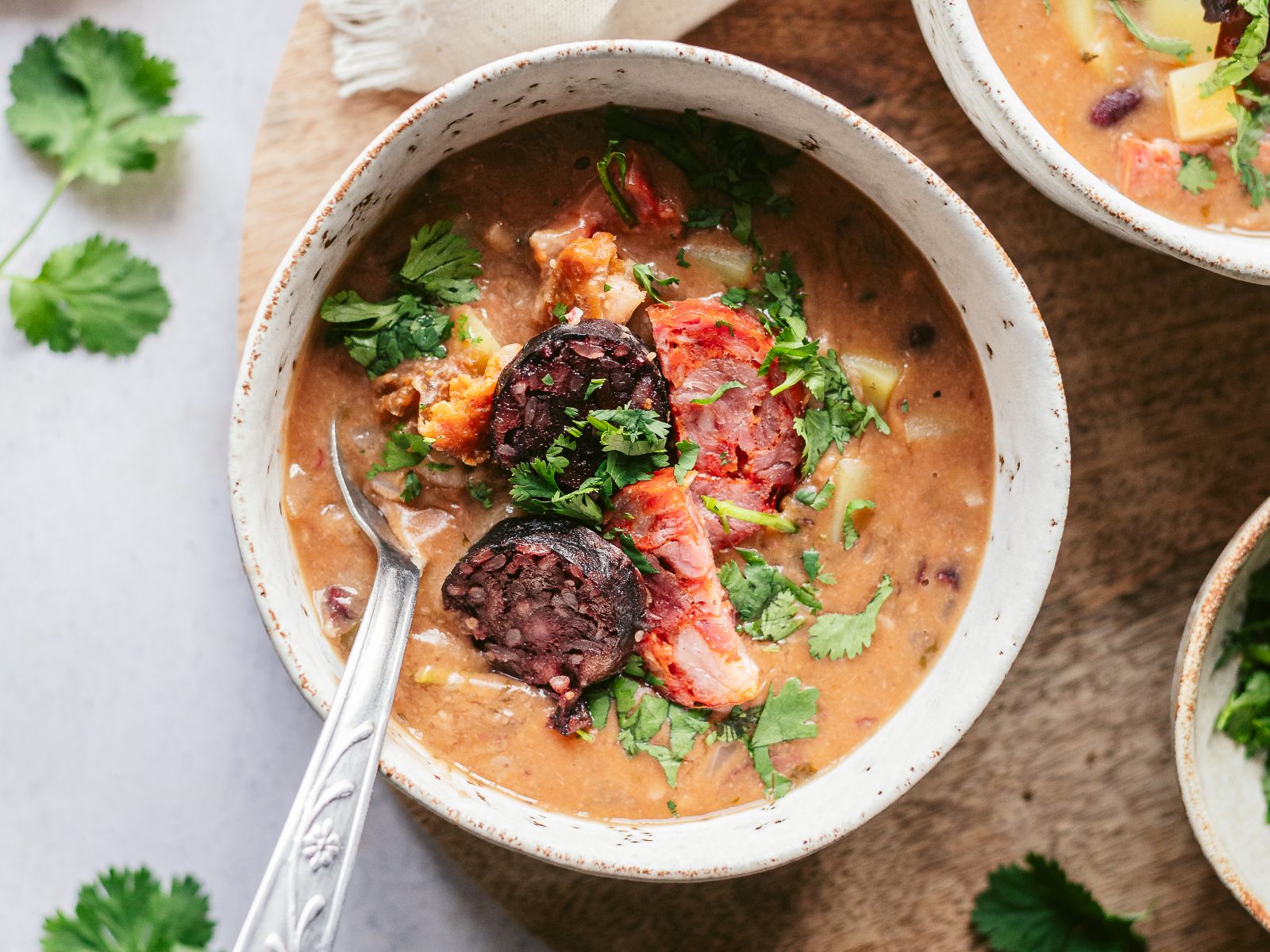
The real dish, whatever its folkloric origins, is Almeirim’s most famous export from the Ribatejo region: a thick, hearty bean and pork soup loaded with chouriço, sometimes morcela, potatoes, and cabbage, so substantial that you eat it with a fork practically standing straight up in the bowl. It is less a starter than a full dinner in a bowl, the kind of soup that follows a long cold day outdoors.
If you already make our caldo verde or canja de galinha (recipes on the site), think of this as their heartier, meatier cousin, closer to a stew than a broth.
Sopa da Pedra Recipe
Ingredients
- 1 cup dried red or white beans, soaked overnight (or 2 cans, about 30 oz total, drained)
- 1/2 lb pork shoulder, cut into chunks
- 1/2 lb pork ribs or a ham hock
- 4 oz chouriço, sliced
- 4 oz morcela (Portuguese blood sausage), sliced, optional, see notes
- 1 onion, chopped
- 3 cloves garlic, minced
- 2 bay leaves
- 1 lb potatoes, peeled and cubed
- 1/2 head cabbage, shredded
- 1 tablespoon sweet paprika
- 2 tablespoons olive oil, plus more for serving
- Salt and black pepper, to taste
- Fresh cilantro or mint, chopped, for serving
Instructions
- If using dried beans, drain the soaked beans and set aside. If using canned beans, just have them ready.
- In a large pot, heat the olive oil and brown the pork shoulder and ribs on all sides, about 8 minutes.
- Add the onion and garlic and cook until softened, about 5 minutes. Stir in the paprika.
- Add the dried beans (if using), the bay leaves, and enough water to cover everything by about 2 inches. Bring to a boil, then reduce heat and simmer, partially covered, for about 1 hour, until the pork and beans are tender.
- Add the chouriço, morcela, and potatoes, and simmer for another 20 minutes.
- If using canned beans, stir them in now along with the cabbage, and simmer another 10 to 15 minutes until the cabbage is tender and everything is well combined.
- Season with salt and pepper to taste. The sausages add a lot of salt already, so taste before adding more, and make sure the pork reaches a safe internal temperature of at least 145°F, which this long simmer easily achieves.
- Ladle into wide bowls, drizzle with a little raw olive oil, and scatter fresh cilantro or mint over the top.
Enjoy our recipes? Add Maria’s Cookbook as a preferred source on Google to see more of our content in your search results.