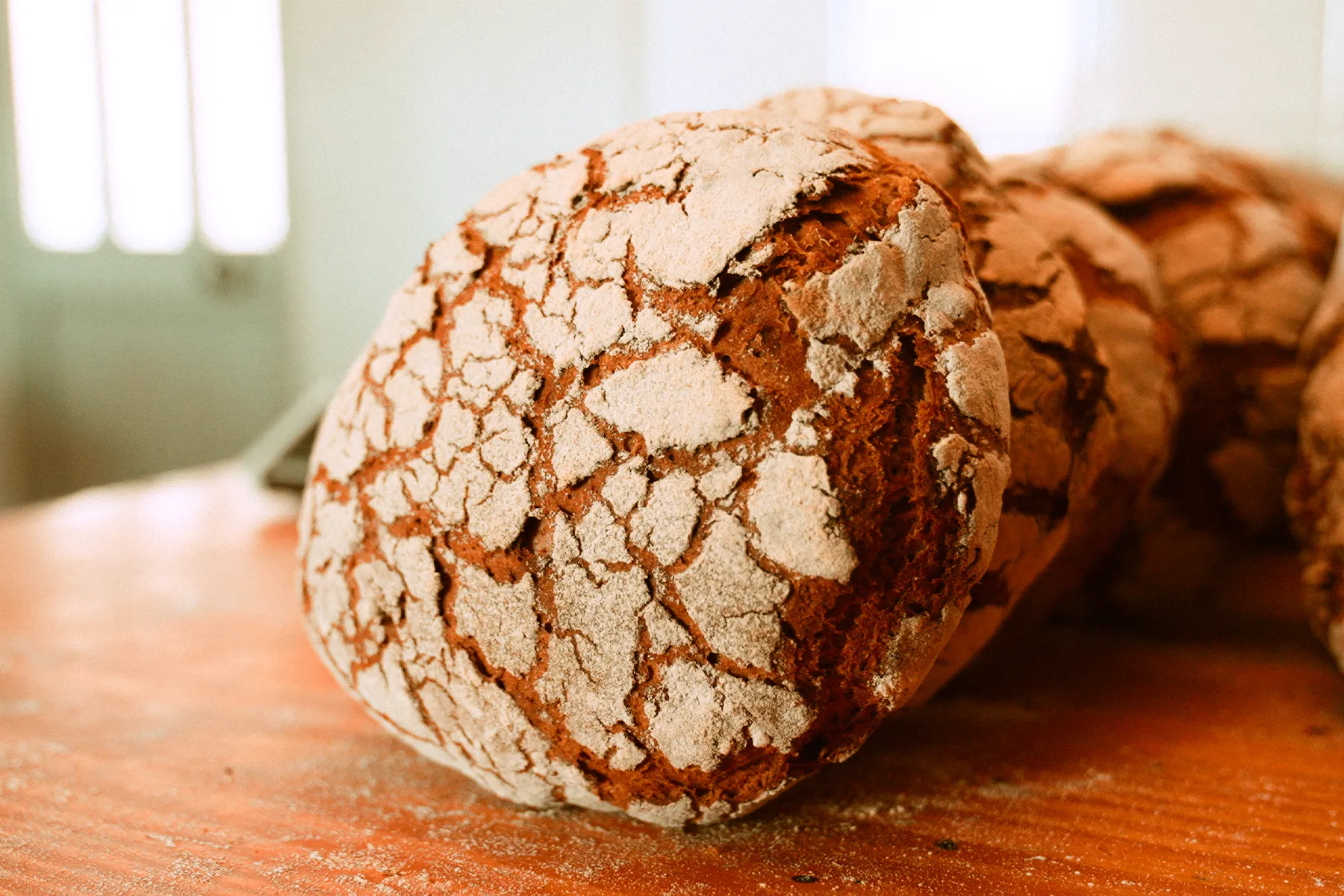
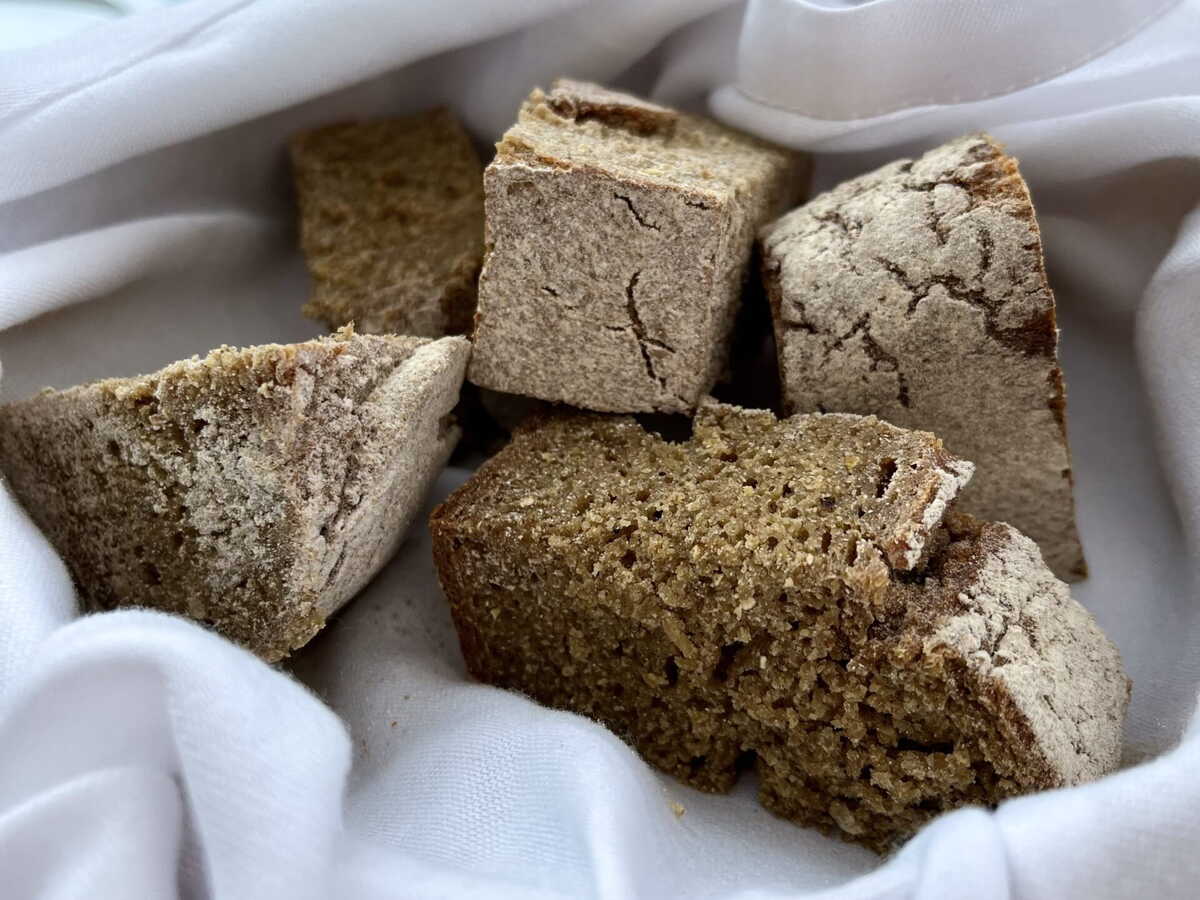
Our broa de milho is the everyday Portuguese cornbread, but broa de Avintes is its denser, more serious cousin from just south of Porto, across the river in Vila Nova de Gaia. Where everyday broa is light enough to eat warm with butter, broa de Avintes is a heavier, dark, almost black-crusted loaf built from corn, rye and wheat flour, meant to last a household most of the week.
This is bread as it was made before anyone worried about proofing times or oven spring: dense, moist, faintly sweet from the corn, with a tang from the rye. It is traditionally torn to eat with Caldo Verde (recipe on the site) or to mop up the last of a Bacalhau com Broa (recipe on the site) pan, since the crumb is sturdy enough to hold up to a wet plate.
Fair warning: this dough is sticky, closer to a thick batter than a smooth, springy dough, and that is exactly right. Do not fight it by adding more flour. Trust it until it comes out of the oven with that deep, cracked crust.
Broa de Avintes Recipe
Ingredients
- 2 cups fine cornmeal (not coarse polenta), plus extra for dusting
- 1 1/2 cups boiling water
- 1 1/2 cups rye flour
- 1 1/2 cups bread flour
- 2 1/4 teaspoons (1 packet) active dry yeast
- 1 teaspoon sugar
- 3/4 cup lukewarm water
- 1 1/2 teaspoons salt
Instructions
- In a large heatproof bowl, pour the boiling water over the cornmeal and stir well to form a thick porridge. Let it cool to lukewarm, about 20 minutes.
- Meanwhile, dissolve the yeast and sugar in the 3/4 cup lukewarm water and let sit for 5-10 minutes until foamy.
- Once the cornmeal mixture has cooled, stir in the yeast mixture, rye flour, bread flour, and salt. Mix with a sturdy spoon or your hands until you have a thick, sticky, cohesive mass; it will not look like a typical bread dough.
- Cover the bowl with a damp towel and let rise in a warm spot for about 1 1/2 hours, until visibly puffed.
- Turn the dough out onto a heavily floured surface. With floured hands, shape it into a round loaf, it will be sticky, use plenty of flour on your hands rather than adding it to the dough.
- Transfer the loaf to a parchment-lined baking sheet or a floured banneton, dust the top with cornmeal, cover loosely, and let rise for another 30-40 minutes.
- Preheat the oven to 450°F with a baking sheet or stone inside. Place a shallow pan of water on the oven floor or lower rack for steam.
- Bake the loaf for 15 minutes at 450°F, then reduce the heat to 375°F and continue baking for another 30-35 minutes, until deeply browned and the loaf sounds hollow when tapped on the bottom.
- Cool completely on a rack, at least 2 hours, before slicing; cutting it warm makes it gummy and the crumb will not set properly.
Enjoy our recipes? Add Maria’s Cookbook as a preferred source on Google to see more of our content in your search results.