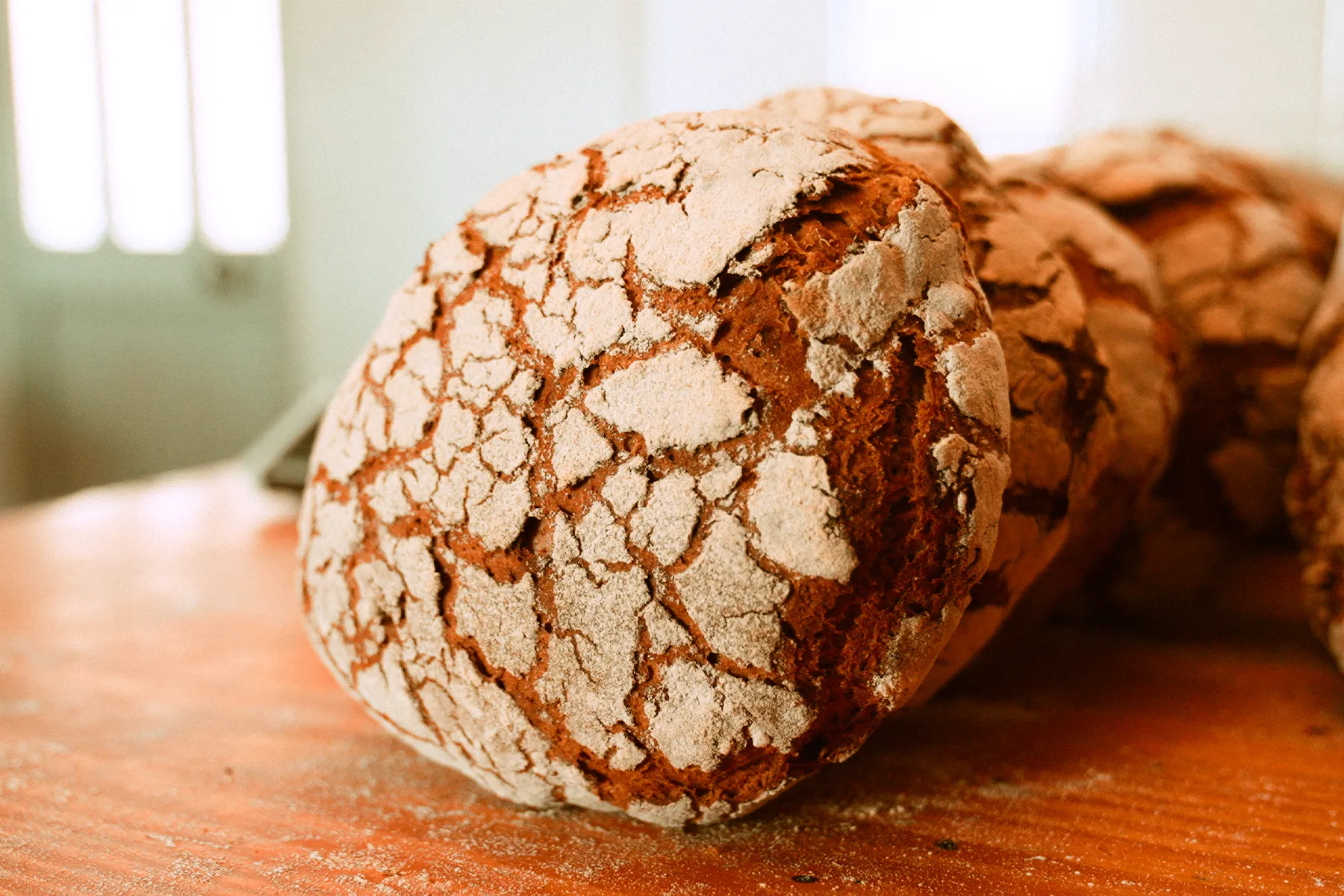
In the villages of Trás-os-Montes, bread day was an event. Once a week the community oven was fired with oak and broom, and women arrived with their dough under a cloth, their marks scratched into the loaves. The dark, dense rye loaf (pão de centeio) was the everyday bread of the highlands, because rye grows where wheat gives up. It kept for a week, tasted better on day three, and stood up to a bowl of Caldo Verde (recipe on the site).
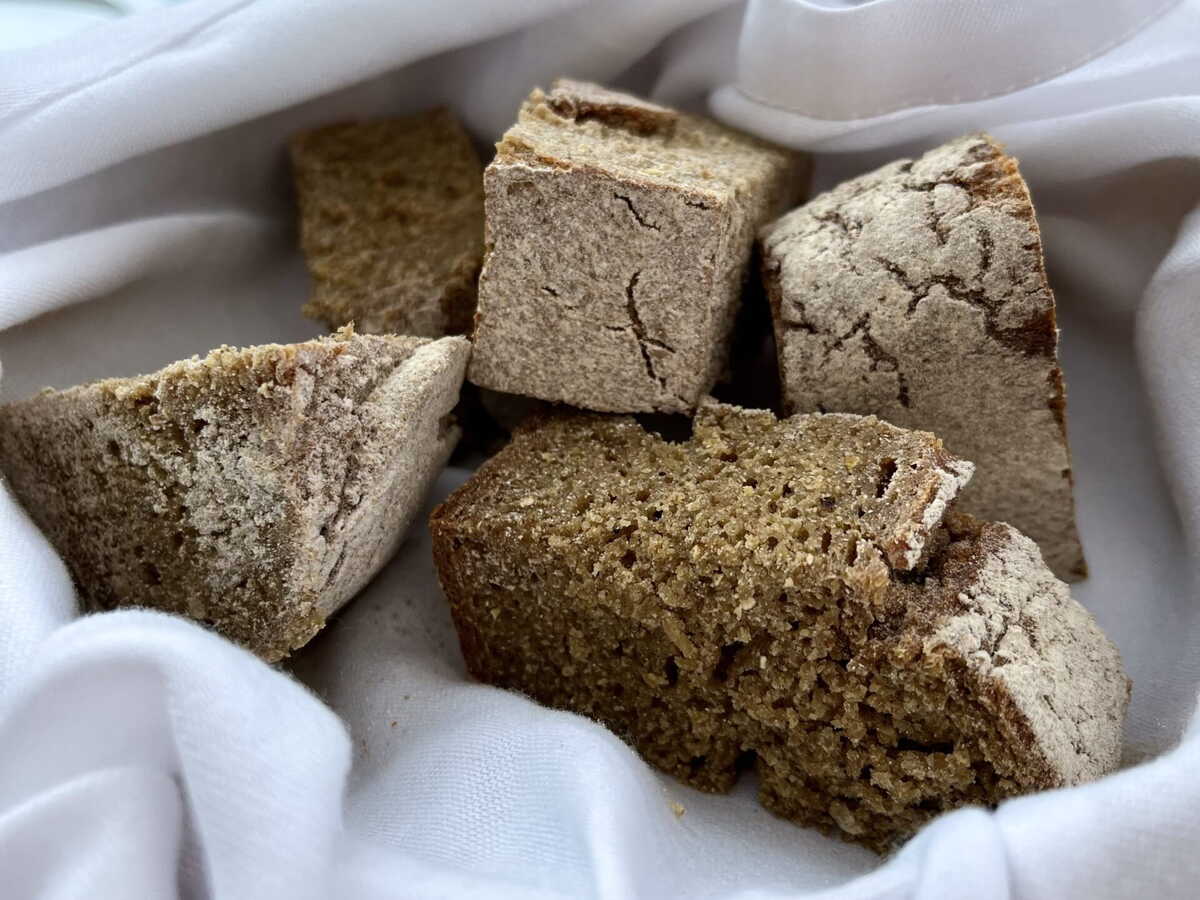
This home version uses a blend of rye and bread flour, a Dutch oven for a wood-oven-style crust, and ordinary instant yeast. It will not taste exactly like a village loaf baked with a natural starter, but it comes close in an American kitchen. The crumb is moist and tangy, and the crust is thick and cracks beautifully.
Slice it thick for Bacalhau com Broa (recipe on the site), toast it for Alheira de Mirandela (recipe on the site), or just eat it with butter and good cheese. For a lighter loaf, reduce the rye to 1½ cups and increase the bread flour accordingly.
Pão de Centeio Recipe
Ingredients
- 2 cups (250 g) whole or medium rye flour
- 2½ cups (310 g) bread flour, plus more for dusting
- 2¼ teaspoons (1 packet) instant yeast
- 2 teaspoons fine sea salt
- 1 tablespoon honey
- 1¾ cups plus 2 tablespoons (440 ml) lukewarm water
- 1 tablespoon olive oil
- Cornmeal or flour for dusting the pot
Instructions
- Whisk the rye flour, bread flour, yeast, and salt in a large bowl. Stir the honey into the warm water until dissolved, then pour it in along with the olive oil.
- Mix with a wooden spoon until no dry flour remains. Rye dough is sticky; resist the urge to add lots of flour. Cover and let rest for 20 minutes.
- With wet hands, stretch and fold the dough over itself 8 to 10 times in the bowl. Cover and let rise at room temperature for 1½ to 2 hours until puffy and about 1½ times its size.
- Turn the dough onto a well-floured surface and shape it into a tight round, using floured hands and a bench scraper. Place it seam-side down on parchment paper, cover loosely, and let it rise 45 minutes.
- Meanwhile, place a Dutch oven with its lid in the oven and preheat to 475°F for at least 30 minutes.
- Dust the loaf with flour and score the top with a sharp knife. Lift it into the hot pot by the parchment, cover, and bake for 25 minutes. Lower the heat to 450°F, remove the lid, and bake 20 to 25 minutes more until deeply browned and the loaf sounds hollow when tapped (internal temperature around 205°F).
- Cool on a wire rack for at least 2 hours before slicing. Rye needs time to set or the crumb stays gummy.
Enjoy our recipes? Add Maria’s Cookbook as a preferred source on Google to see more of our content in your search results.