Every Portuguese region has an opinion about pão de ló, and each thinks its version is the only correct one. In much of the north it is a fully baked, slightly dry sponge, good for dunking in coffee.
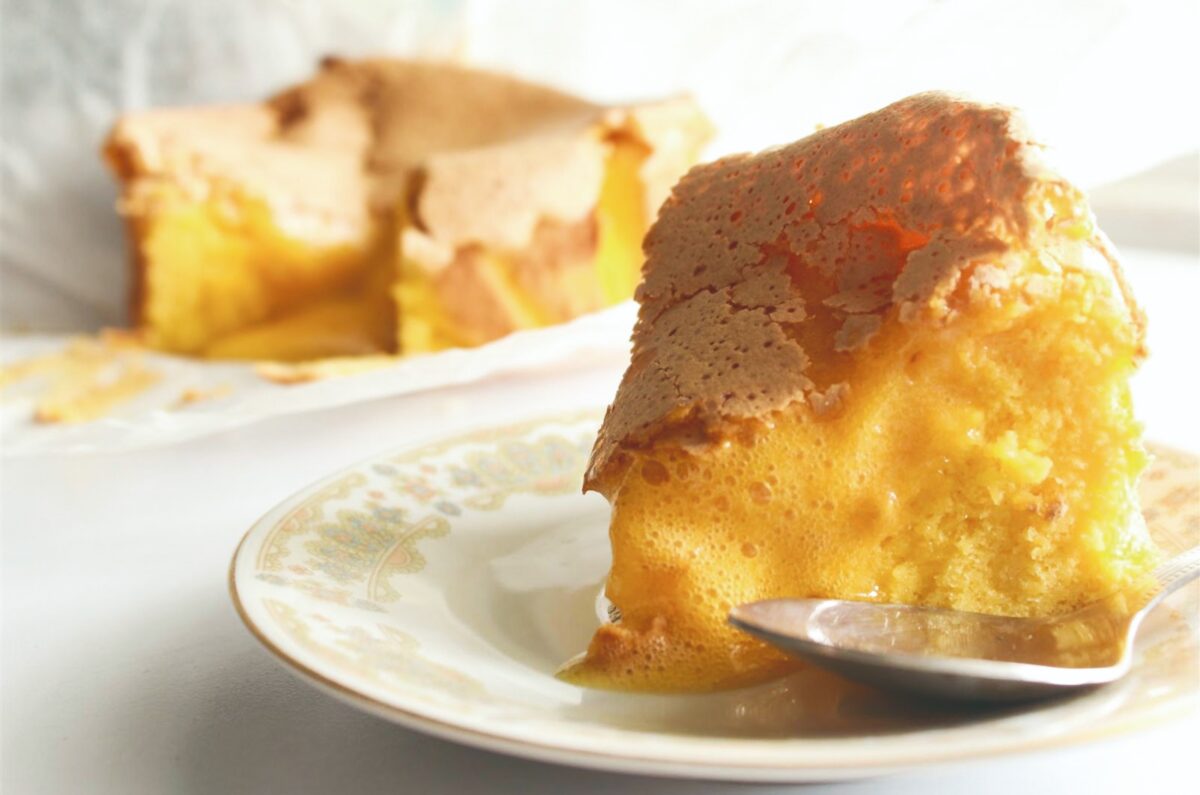
The Ovar and Alfeizão style, which is this recipe, is the other camp entirely: a cake deliberately underbaked in the center, so that when you slice it the middle spills out almost like a custard. First-timers often assume it is a mistake. It is not; that gooey center is the entire point.
The trick is egg yolks, a shocking number of them, barely any flour, and a short, hot bake so the outside sets while the inside stays molten. It is closely related in spirit to our Toucinho do Céu and Encharcada (both recipes on the site), which is no coincidence: they all come from the same convent egg-yolk tradition.
Portuguese convent baking loved nothing more than finding new ways to use up egg yolks after convents sold the whites to wineries for clarifying wine. This is what monastic thriftiness looks like when it is also delicious.
It shows up on Portuguese tables for birthdays and at Christmas alongside Rabanadas (recipe on the site), and it keeps and travels well.
Pao de Lo de Ovar (Portuguese Sponge Cake) Recipe
Ingredients
- 14 large egg yolks, room temperature
- 4 large whole eggs, room temperature
- 1 1/2 cups granulated sugar
- 1 cup all-purpose flour, sifted
- 1 teaspoon lemon zest
- Butter and flour, for the pan
- Powdered sugar, for dusting (optional)
Instructions
- Preheat the oven to 350 F. Butter a 9-inch round cake pan (with at least 2-inch sides) and line the bottom with parchment paper.
- In a stand mixer, beat the egg yolks, whole eggs, and sugar together on high speed for 8 to 10 minutes, until pale, thick, and roughly tripled in volume. This step cannot be rushed, it is what gives the cake its structure.
- Sprinkle the sifted flour and lemon zest over the egg mixture in two additions, folding in gently by hand each time so you do not deflate the batter.
- Pour the batter into the prepared pan.
- Bake for 30 to 35 minutes, until the top is golden and just set but a toothpick inserted 2 inches from the center still comes out with wet batter clinging to it. The very center should remain deliberately underdone.
- Let the cake cool in the pan for at least 1 hour before attempting to unmold; it firms up as it sits. Run a knife around the edge, invert onto a plate, and dust with powdered sugar if desired before serving.
Enjoy our recipes? Add Maria’s Cookbook as a preferred source on Google to see more of our content in your search results.