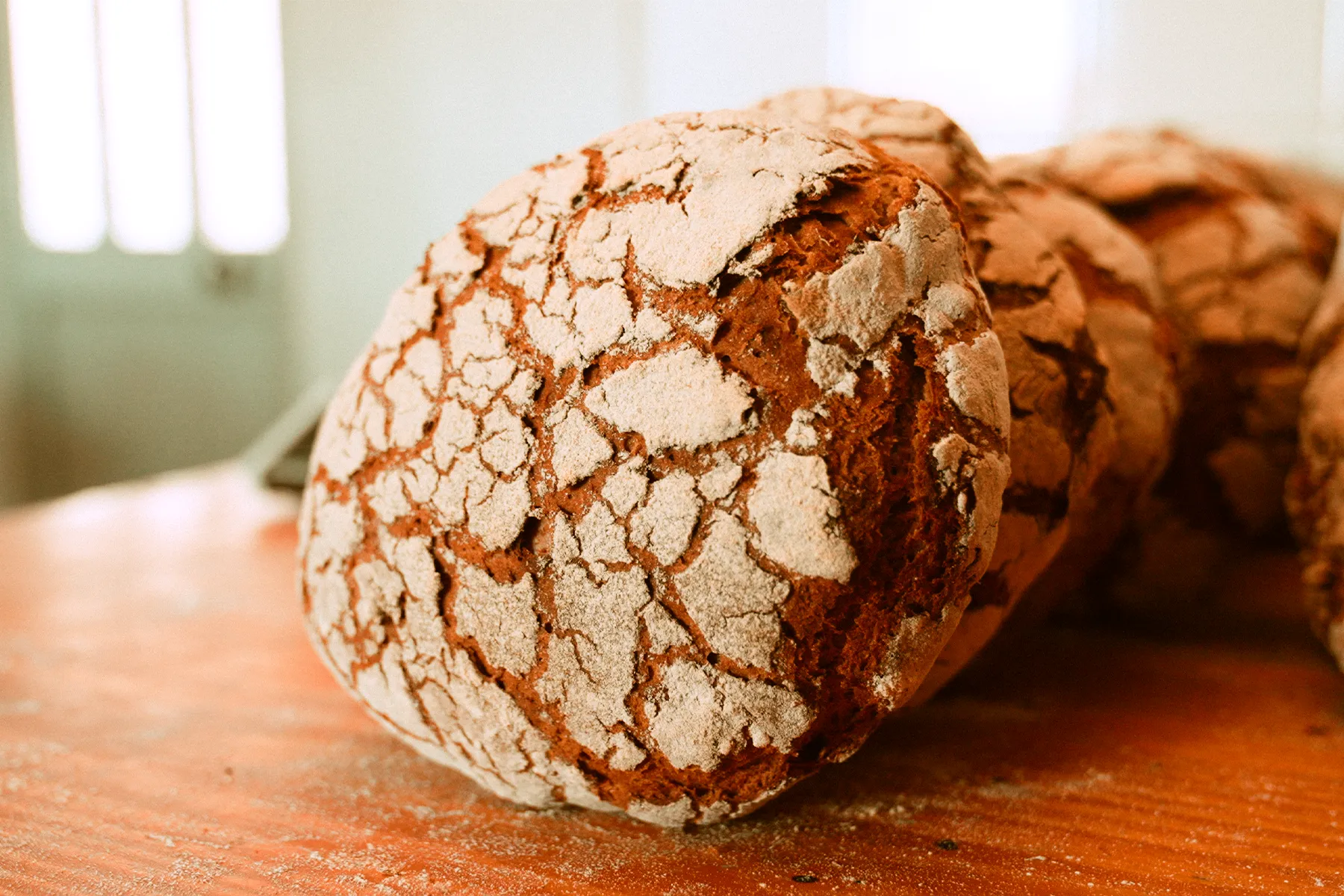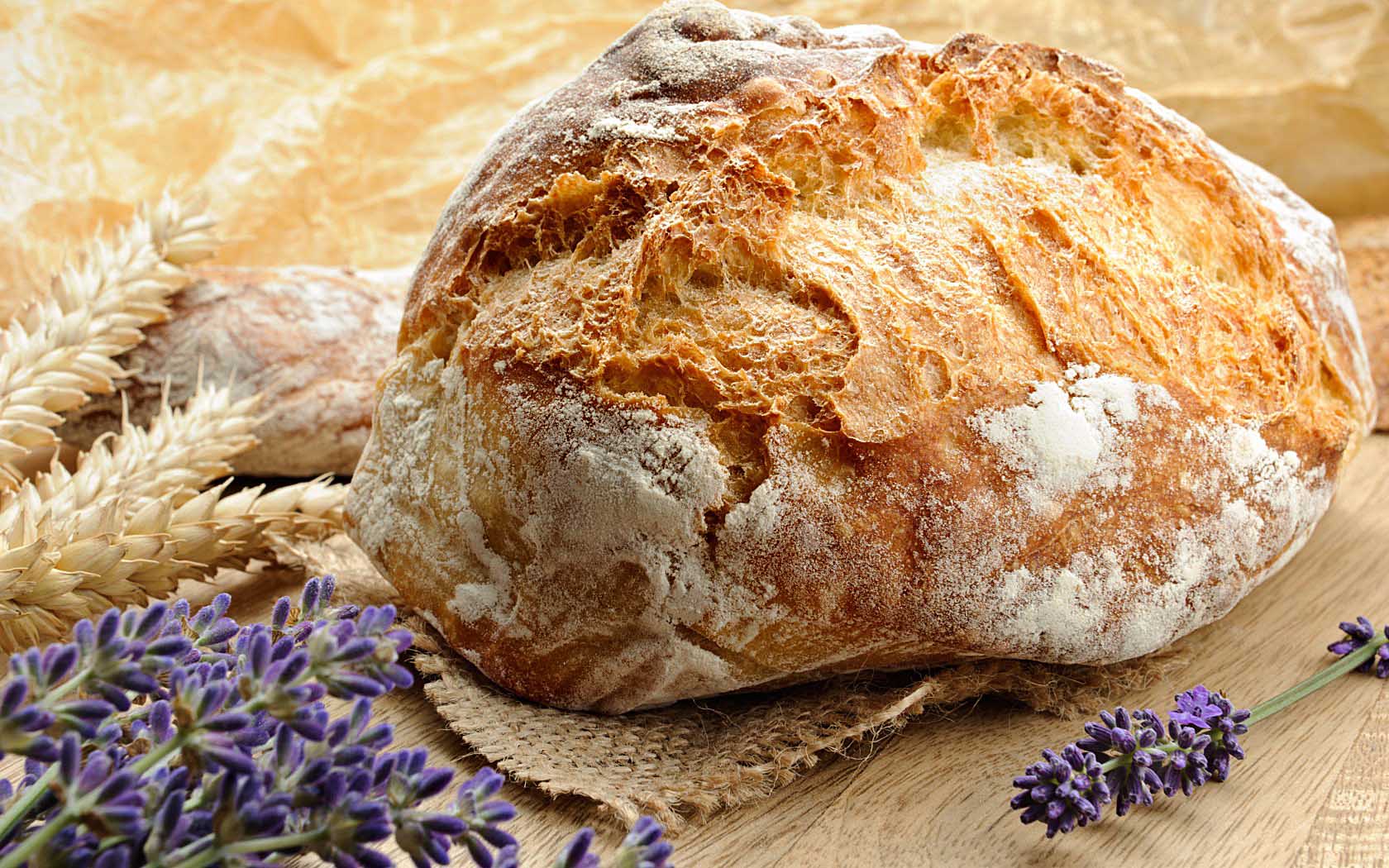
Pão alentejano comes from the golden wheat plains south of Lisbon, and it is very different from the corn and rye breads of the granite north: a thick, crackling crust and a wild, irregular crumb.
That crust and crumb are the whole reason açorda alentejana (recipe on the site) and migas alentejanas (recipe on the site) taste the way they do.
Pão Alentejano is a rustic wheat bread with a name that simply means bread from the Alentejo, the vast agricultural region between Lisbon and the Spanish border. Traditionally it is leavened with massa velha, a piece of dough saved from the previous week’s batch, and baked in wood-fired ovens until the crust turns almost black in spots while the crumb stays dense, moist, and full of holes, sturdy enough to soak up soup without falling apart.
This home version uses commercial yeast and a Dutch oven standing in for the wood-fired oven, with a series of folds every 30 minutes. American bread flour gets you very close to the real thing; just trust the process when the dough looks far too loose to ever become bread.
Pão Alentejano Recipe
Ingredients
- 4 cups (500g) bread flour, plus more for dusting
- 1 1/2 cups (360ml) warm water
- 1 teaspoon active dry yeast
- 2 teaspoons fine sea salt
- Rice flour or cornmeal, for dusting the proofing basket
Instructions
- In a large bowl, dissolve the yeast in the warm water and let sit 5 minutes until foamy.
- Add the bread flour and salt. Mix with a wooden spoon or your hands until a shaggy, wet dough forms, it will feel much stickier than a typical American sandwich bread dough, and that is correct.
- Cover the bowl and let rest at room temperature for 30 minutes. Then, with wet hands, fold the dough over itself from all four sides. Repeat this fold every 30 minutes for the first 2 hours.
- Cover tightly and refrigerate 12 to 18 hours, overnight is perfect.
- The next day, turn the dough out onto a well-floured surface. Shape gently into a round or oval loaf, being careful not to deflate it too much, the big irregular holes are part of the charm.
- Place the loaf seam-side down in a well-floured proofing basket or a bowl lined with a floured towel. Cover and let rise 1 to 1 1/2 hours at room temperature, until puffy.
- About 45 minutes before baking, place a Dutch oven with its lid on inside your oven and preheat to 475°F.
- Carefully turn the dough out onto parchment paper, dust with flour, and score the top with a sharp knife or razor blade.
- Using the parchment as a sling, lower the dough into the hot Dutch oven. Cover and bake 20 minutes, then uncover and bake another 20 to 25 minutes, until deep golden brown and hollow-sounding when tapped.
- Cool on a wire rack at least 30 minutes before slicing, as hard as that is.
Enjoy our recipes? Add Maria’s Cookbook as a preferred source on Google to see more of our content in your search results.