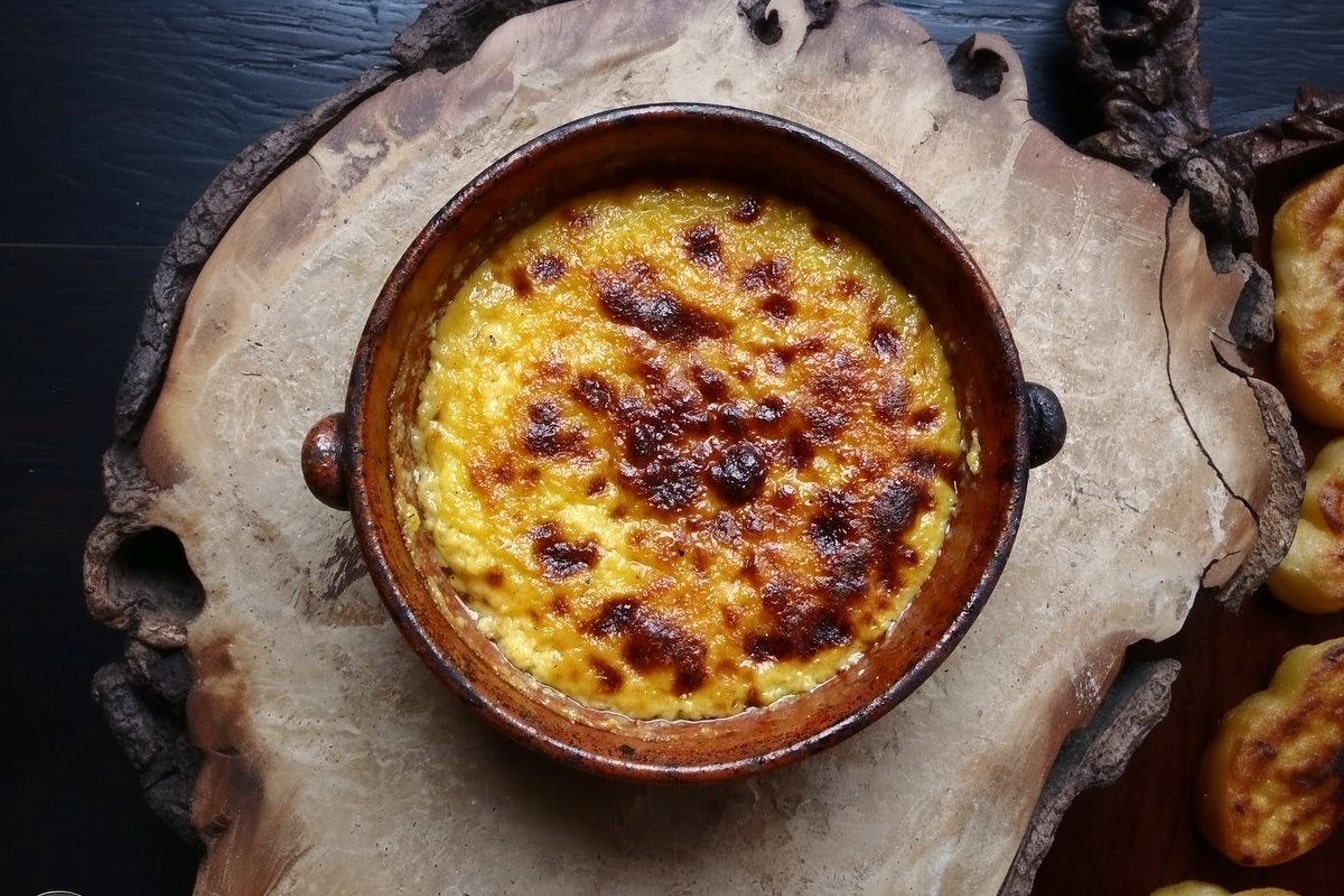
Tigelada is the rustic baked custard of Portuguese villages, and it does not need to apologize to anyone. Traditionally made in a shallow clay bowl (a tigela, which gives it its name), it is baked hot and fast until the top blisters into deep brown, almost burnt-looking patches while the inside stays soft and barely set. It looks a little wild coming out of the oven. That is exactly how it should look.
What sets tigelada apart from a French flan or Leite Creme (recipe on the site) is the technique: very high heat, a shallow vessel so it cooks through fast, and in some regions a spoonful of pork fat worked into the batter, which deepens the caramelized top. This recipe lets you use butter instead, though the old way is worth trying once.
We make this in early autumn when the village would have been finishing the wine harvest and every household had lard and fresh eggs on hand, but truthfully there is no wrong season for it. Serve it warm, straight from the dish it baked in, with nothing more than a spoon.
Tigelada Transmontana Recipe
Ingredients
- 6 large eggs
- 3 cups whole milk
- 1 cup granulated sugar
- 3 tablespoons all-purpose flour
- 1 tablespoon unsalted butter, melted (or lard, for a traditional version)
- 1 cinnamon stick
- 1 strip lemon peel (no white pith)
- Ground cinnamon, for dusting
- Butter or lard, for greasing the dish
Instructions
- Preheat the oven to 475 degrees F. Generously grease a wide, shallow baking dish (a ceramic pie dish or shallow ovenproof clay dish works well) with butter or lard.
- In a small saucepan, warm the milk with the cinnamon stick and lemon peel over medium heat until it just begins to steam. Do not boil. Remove from heat, cover, and let steep for 10 minutes, then remove the cinnamon and lemon peel.
- In a large bowl, whisk the eggs and sugar together until pale and well combined, about 2 minutes.
- Whisk in the flour until no lumps remain, then slowly pour in the warm milk, whisking constantly.
- Whisk in the melted butter or lard.
- Pour the mixture into the prepared dish. It should be a shallow layer, no more than 1 inch deep, so it cooks quickly and evenly.
- Bake for 20 to 25 minutes, until the top is deeply browned in blistered patches and the custard is just set but still has a gentle wobble in the center.
- Let cool for at least 20 minutes before serving; the custard continues to set as it cools. Dust with ground cinnamon and serve warm or at room temperature, straight from the dish.
Enjoy our recipes? Add Maria’s Cookbook as a preferred source on Google to see more of our content in your search results.