
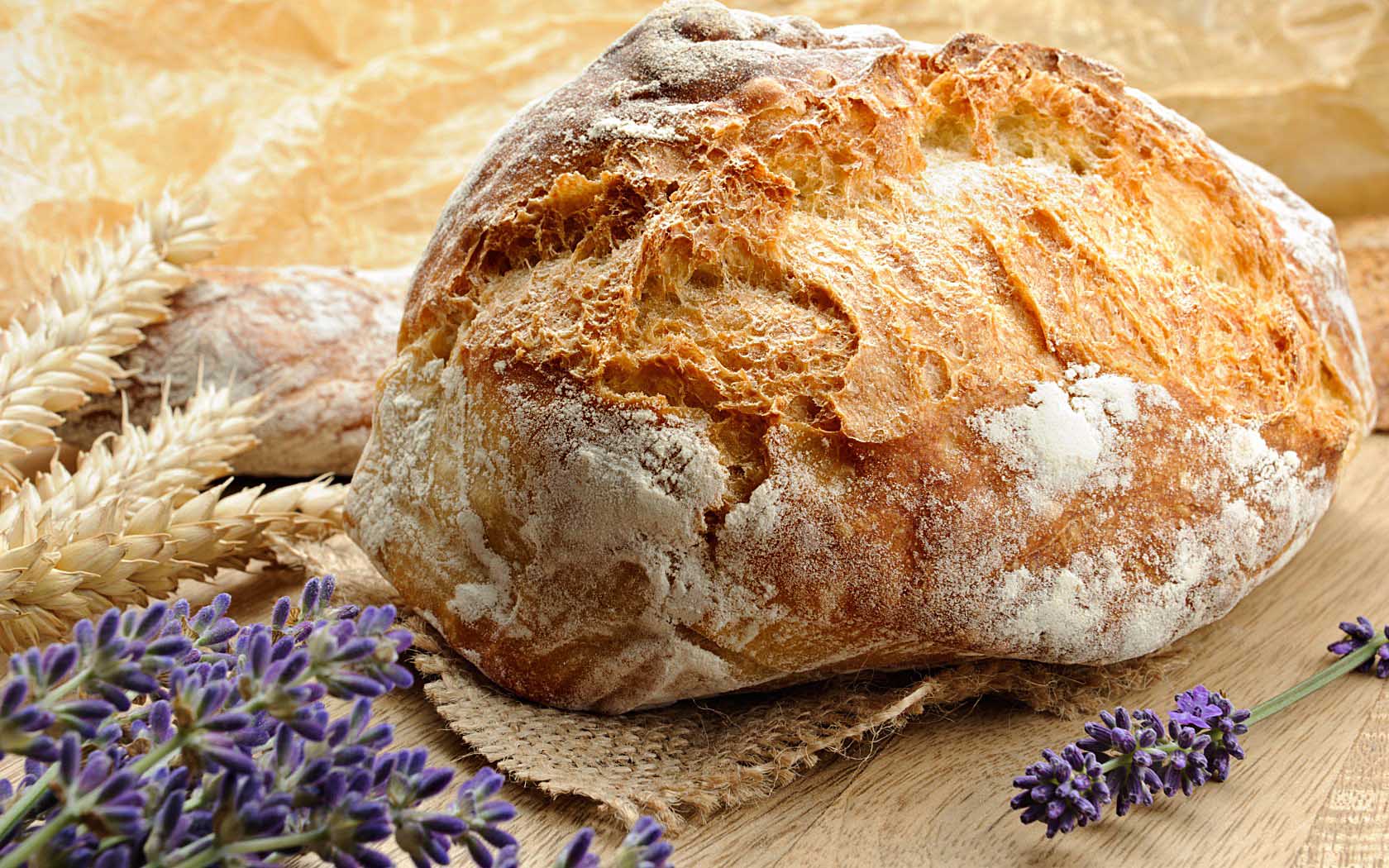
My husband likes to tease me that I fell in love with Alentejo bread before I fell in love with him, and honestly, it is a close call. The first time I drove through those endless golden wheat plains south of Lisbon, so different from the granite hillsides of Trás-os-Montes where I grew up, I stopped at a village bakery and bought a loaf still warm enough to fog up the car window.
That thick, crackling crust and the wild, irregular holes inside it, unlike any bread my grandmother baked, are the whole reason açorda alentejana (recipe on the site) and migas alentejanas (recipe on the site) taste the way they do.
Pão Alentejano is a rustic wheat bread with a name that simply means bread from the Alentejo, the vast agricultural region between Lisbon and the Spanish border. Traditionally it is leavened with massa velha, a piece of dough saved from the previous week’s batch, and baked in wood-fired ovens until the crust turns almost black in spots while the crumb stays dense, moist, and full of holes, sturdy enough to soak up soup without falling apart.
At home I use commercial yeast and a Dutch oven standing in for the wood-fired oven, and Sofia, my baking apprentice, has appointed herself official dough-folder, which is really just an excuse to get her hands in something wet and sticky every 30 minutes. American bread flour gets you very close to the real thing; just trust the process when the dough looks far too loose to ever become bread.
Pão Alentejano Recipe
Prep time: 30 minutes (plus 12-18 hours fermenting) · Cook time: 45 minutes · Total: About 14-19 hours total, mostly hands-off · Servings: 1 large loaf (about 12 slices) · Calories: ~140 per serving
Ingredients
- 4 cups (500g) bread flour, plus more for dusting
- 1 1/2 cups (360ml) warm water
- 1 teaspoon active dry yeast
- 2 teaspoons fine sea salt
- Rice flour or cornmeal, for dusting the proofing basket
Instructions
- In a large bowl, dissolve the yeast in the warm water and let sit 5 minutes until foamy.
- Add the bread flour and salt. Mix with a wooden spoon or your hands until a shaggy, wet dough forms, it will feel much stickier than a typical American sandwich bread dough, and that is correct.
- Cover the bowl and let rest at room temperature for 30 minutes. Then, with wet hands, fold the dough over itself from all four sides. Repeat this fold every 30 minutes for the first 2 hours.
- Cover tightly and refrigerate 12 to 18 hours, overnight is perfect.
- The next day, turn the dough out onto a well-floured surface. Shape gently into a round or oval loaf, being careful not to deflate it too much, the big irregular holes are part of the charm.
- Place the loaf seam-side down in a well-floured proofing basket or a bowl lined with a floured towel. Cover and let rise 1 to 1 1/2 hours at room temperature, until puffy.
- About 45 minutes before baking, place a Dutch oven with its lid on inside your oven and preheat to 475°F.
- Carefully turn the dough out onto parchment paper, dust with flour, and score the top with a sharp knife or razor blade.
- Using the parchment as a sling, lower the dough into the hot Dutch oven. Cover and bake 20 minutes, then uncover and bake another 20 to 25 minutes, until deep golden brown and hollow-sounding when tapped.
- Cool on a wire rack at least 30 minutes before slicing, as hard as that is.
Recipe Notes
- This bread is the traditional base for açorda alentejana (recipe on the site) and migas alentejanas (recipe on the site); day-old, slightly stale loaf works best for both.
- Traditional Alentejo bakers use massa velha, a piece of dough saved from the previous batch, in place of commercial yeast; if you keep a sourdough starter, feel free to substitute 1 cup of active starter for the yeast and reduce the water slightly.
- American bread flour (12-13% protein) gives the closest texture to Portuguese trigo flour; all-purpose flour will work in a pinch but the crumb will be a touch less chewy.
- The dough will look far too wet and sticky compared to most bread recipes, resist the urge to add extra flour, since that open, custardy crumb is the whole point.
Enjoy our recipes? Add Maria’s Cookbook as a preferred source on Google to see more of our content in your search results.