Maria's Cookbook
  • About
  • Contact
  • Recipes
    • Appetizers
    • Bread
    • Breakfast
    • Desserts
    • Drinks
    • Main dishes
    • Salads
    • Sauces
    • Soups
  • About
  • Contact
  • Recipes
    • Appetizers
    • Bread
    • Breakfast
    • Desserts
    • Drinks
    • Main dishes
    • Salads
    • Sauces
    • Soups
No Result
View All Result
Maria's Cookbook
No Result
View All Result
Home Main dishes

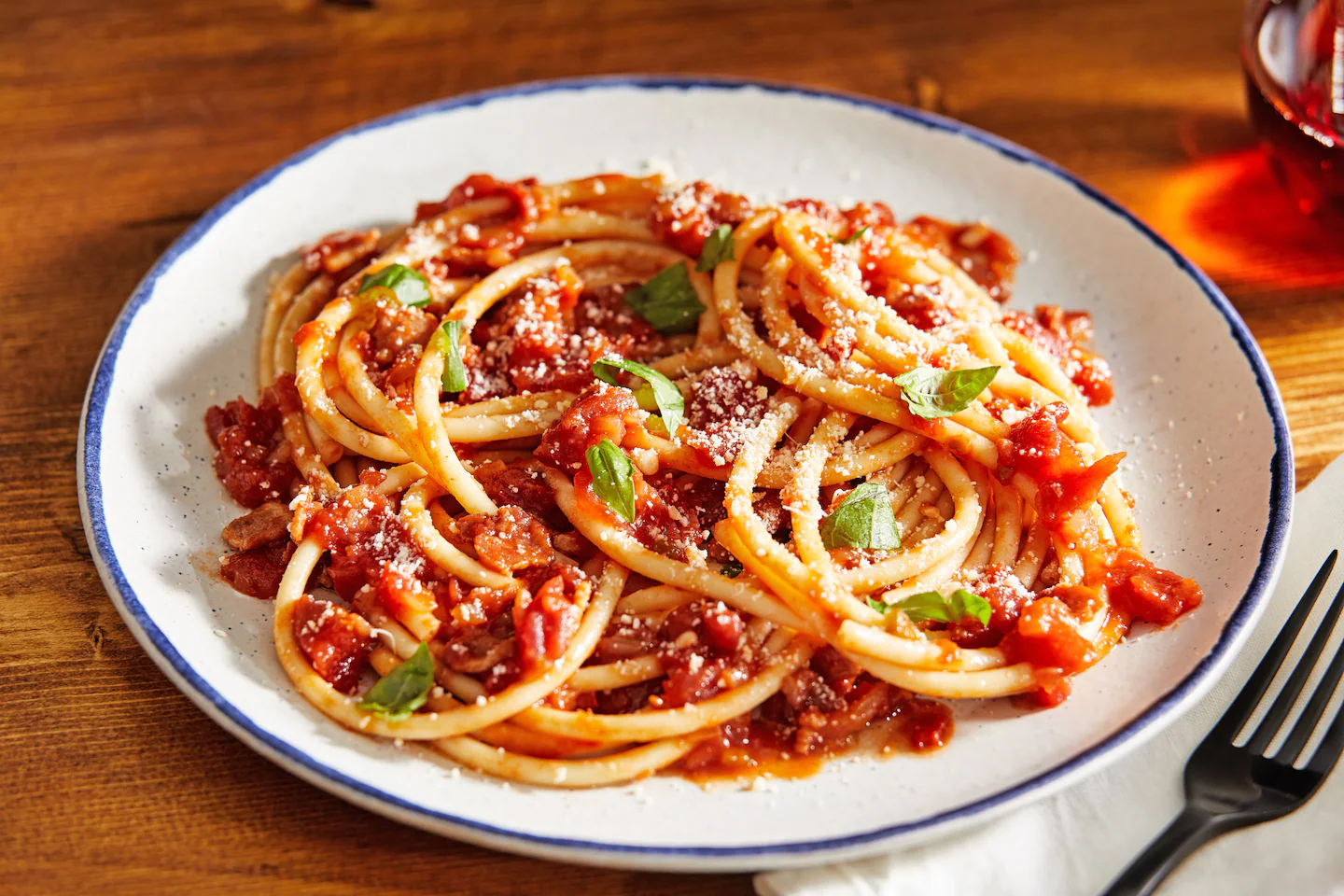
Bucatini all’Amatriciana (Roman Pasta with Guanciale, Tomato and Pecorino)

by Maria
August 29, 2026
in Main dishes
0 0
0
Bucatini all'Amatriciana (Roman Pasta with Guanciale, Tomato and Pecorino)

Bucatini all'Amatriciana (Roman Pasta with Guanciale, Tomato and Pecorino)

0
SHARES
1
VIEWS
Share on FacebookShare on Twitter

Lucas, my resident savory-quality-control officer, once declared this the best pasta he’s ever had, then immediately asked why it wasn’t spaghetti and meatballs, which tells you everything about the gap between what Americans think of as Italian food and what Rome actually eats on a Tuesday night. Bucatini all’Amatriciana is Roman through and through — a handful of ingredients, cooked with real technique, and no cream in sight.

This sits alongside my other Italian recipes like Pasta alla Norma (recipe on the site) and Orecchiette alle Cime di Rapa (recipe on the site) as proof that Italy’s regional pasta traditions rarely need more than four or five components to be extraordinary. The dish takes its name from Amatrice, a small town northeast of Rome, and the defining ingredient is guanciale — cured pork jowl — which renders down into a silky fat that coats every strand of pasta.

Guanciale can be tricky to find in an average American supermarket, but Italian delis, specialty butchers, and most online Italian grocers carry it, and it’s worth the search. In a genuine pinch, thick-cut pancetta is the closest substitute, though the flavor won’t be quite as deep.

Bucatini all’Amatriciana Recipe

Prep time: 10 minutes · Cook time: 30 minutes · Total: 40 minutes · Servings: 4 · Calories: ~520 per serving

Ingredients

  • 1 pound bucatini (or spaghetti)
  • 6 ounces guanciale, cut into small strips (pancetta as a substitute)
  • 1 (28-ounce) can San Marzano tomatoes, crushed by hand
  • 1/2 teaspoon crushed red pepper flakes, or to taste
  • 1/2 cup dry white wine
  • 1 cup finely grated Pecorino Romano, plus more for serving
  • Salt, to taste
  • Freshly cracked black pepper, to taste

Instructions

  1. Bring a large pot of well-salted water to a boil for the pasta.
  2. Meanwhile, place the guanciale in a large, cold skillet and set over medium heat. Cook slowly, stirring occasionally, until the fat renders and the guanciale turns crisp and golden, 7 to 10 minutes. Remove the guanciale with a slotted spoon and set aside, leaving the rendered fat in the pan.
  3. Add the red pepper flakes to the fat in the pan and cook for 30 seconds, until fragrant. Pour in the white wine, scraping up any browned bits, and let it reduce by half, about 2 minutes.
  4. Stir in the crushed tomatoes and a pinch of salt. Simmer over medium-low heat for 15 to 20 minutes, stirring occasionally, until the sauce thickens slightly.
  5. While the sauce simmers, cook the bucatini in the boiling water until just al dente, about 1 minute less than the package instructions. Reserve 1 cup of pasta water before draining.
  6. Return the crisped guanciale to the sauce. Add the drained pasta directly to the skillet along with a splash of pasta water, tossing over low heat until everything is glossy and well coated, adding more pasta water as needed.
  7. Remove from heat and stir in the Pecorino Romano a handful at a time, tossing quickly so it melts into a silky sauce rather than clumping. Finish with black pepper and serve immediately with extra Pecorino at the table.

Recipe Notes

  • Never add Parmesan here if you want to be authentic — Pecorino Romano’s sharp, salty bite is essential to real Amatriciana, and Parmesan changes the character of the dish entirely.
  • Adding the cheese off the heat, a little at a time while tossing, prevents it from seizing into clumps or breaking into a grainy sauce.
  • If guanciale is unavailable, thick-cut pancetta is the best substitute; regular bacon will work in a real pinch but adds a smokiness that isn’t traditional.
  • This sauce also freezes well on its own (without the pasta) for up to 2 months — just thaw and toss with freshly cooked bucatini and cheese when you’re ready to eat.
WhatsApp Channel
Healthy Mediterranean recipes, straight to your phone
No groups, no clutter — just healthy Mediterranean recipes, sent as soon as they're ready. Follow the channel and never miss the next one.
Follow the Channel

Enjoy our recipes? Add Maria’s Cookbook as a preferred source on Google to see more of our content in your search results.
Add as Preferred Source
Tags: guancialeItalianpastaRoman cuisine
Previous Post

Cocido Madrileño (Madrid Chickpea, Meat and Vegetable Stew)

Next Post

Gigantes Plaki (Greek Baked Giant Beans in Tomato Sauce)

Maria

Maria

Hi, I’m Maria — born in a small village in northern Portugal and now cooking from my kitchen in the USA, where I live with my husband, our two kids and Max the dog. On Maria’s Cookbook I share the recipes I grew up with — from my Trás-os-Montes family table to my grandmother’s Azorean kitchen — along with Mediterranean favorites and dishes I’ve fallen in love with along the way.

Next Post
Gigantes Plaki (Greek Baked Giant Beans in Tomato Sauce)

Gigantes Plaki (Greek Baked Giant Beans in Tomato Sauce)

Leave a Reply Cancel reply

Your email address will not be published. Required fields are marked *

Recent Posts

  • Gigantes Plaki (Greek Baked Giant Beans in Tomato Sauce)
  • Bucatini all’Amatriciana (Roman Pasta with Guanciale, Tomato and Pecorino)
  • Cocido Madrileño (Madrid Chickpea, Meat and Vegetable Stew)
  • Fabada Asturiana (Asturian White Bean and Chorizo Stew)
  • Saganaki (Greek Pan-Fried Cheese)

Recent Comments

  1. Gigantes Plaki (Greek Baked Giant Beans in Tomato Sauce) | Maria's Cookbook on Avgolemono (Greek Lemon Chicken Soup)
  2. Bucatini all'Amatriciana (Roman Pasta with Guanciale, Tomato and Pecorino) | Maria's Cookbook on Pasta alla Norma (Sicilian Eggplant Pasta with Ricotta Salata)
  3. Cocido Madrileño (Madrid Chickpea, Meat and Vegetable Stew) | Maria's Cookbook on Cozido à Portuguesa (Portuguese stew)
  4. Fabada Asturiana (Asturian White Bean and Chorizo Stew) | Maria's Cookbook on Butelo com Casulas (Trás-os-Montes Smoked Pork and Bean Stew)
  5. Empanada Gallega de Atún (Galician Tuna Empanada) | Maria's Cookbook on Empadão de atum
  • About
  • Contact
  • Privacy Policy

© Maria’s Cookbook · Family recipes from Portugal, the Mediterranean and beyond. All rights reserved.

Welcome Back!

Login to your account below

Forgotten Password?

Retrieve your password

Please enter your username or email address to reset your password.

Log In
No Result
View All Result
  • About
  • Contact
  • Recipes
    • Appetizers
    • Bread
    • Breakfast
    • Desserts
    • Drinks
    • Main dishes
    • Salads
    • Sauces
    • Soups

© Maria’s Cookbook · Family recipes from Portugal, the Mediterranean and beyond. All rights reserved.