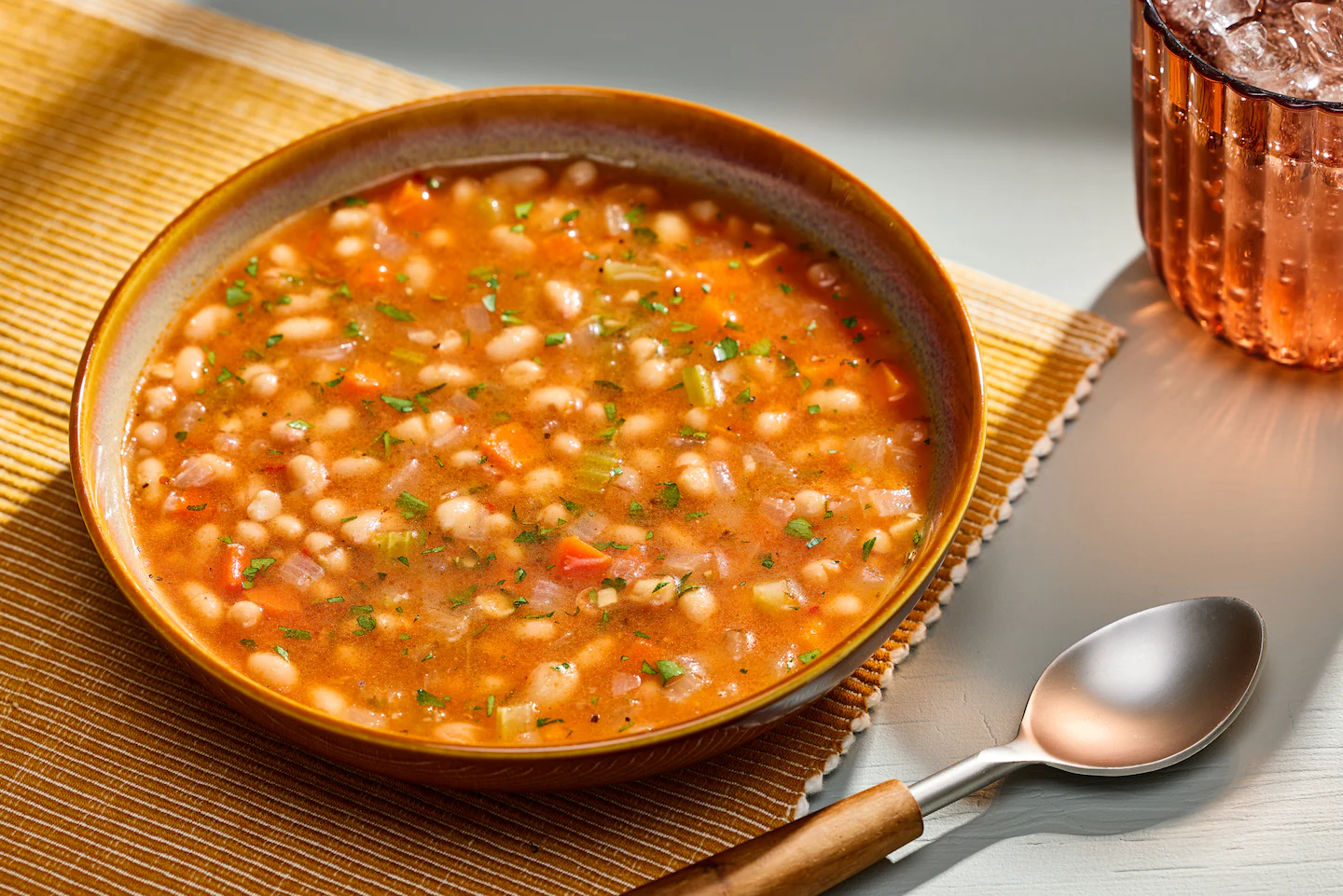
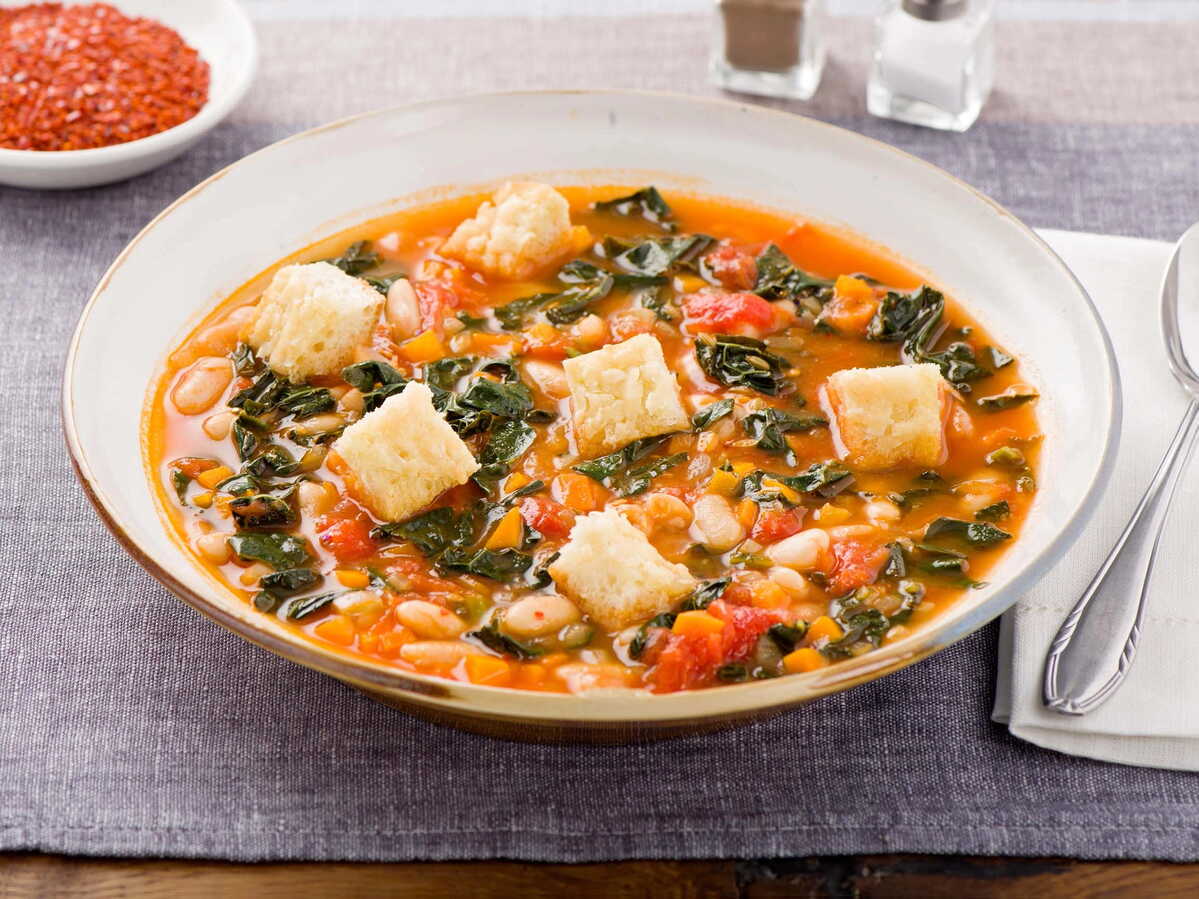
Ribollita means re-boiled, a humble name for a soup that deserves better marketing: it is one of the smartest ways to turn stale bread and end-of-week vegetables into something that tastes like it took all day, mostly because it kind of does.
This is Tuscan peasant cooking at its most practical: nothing goes to waste, the bread thickens the soup instead of sitting on the side of the bowl, and it genuinely tastes better as leftovers the second or even third day, which is exactly the point of the name.
It is a classic of Florentine trattorias and a perfect answer to the question of what to do with a half loaf of bread that is going stale.
It leans on cavolo nero, also called lacinato or dinosaur kale, along with cannellini beans and whatever hearty vegetables are around, all simmered low and slow, then layered with torn bread and re-heated until it thickens into something closer to a stew than a soup.
It shares its soul with a lot of Portuguese cooking: good olive oil, humble ingredients, and a recipe built by people who could not afford to waste food.
Ribollita Recipe
Ingredients
- 1/3 cup extra-virgin olive oil, plus more for serving
- 1 large yellow onion, chopped
- 2 carrots, chopped
- 2 celery stalks, chopped
- 3 cloves garlic, minced
- 1 can (28 oz) whole peeled tomatoes, crushed by hand
- 2 cans (15 oz each) cannellini beans, drained and rinsed, divided
- 6 cups vegetable or chicken stock
- 1 bunch cavolo nero (lacinato/dinosaur kale), stems removed, leaves torn
- 1/2 small head savoy cabbage, thinly sliced
- 1 Parmesan rind (optional, but recommended)
- 4 to 6 cups torn day-old crusty bread, crusts on
- Salt and black pepper, to taste
- Red pepper flakes, for serving (optional)
Instructions
- Heat the olive oil in a large Dutch oven over medium heat. Add the onion, carrots, and celery, and cook for 8 to 10 minutes, until softened.
- Add the garlic and cook for 1 minute, until fragrant.
- Stir in the crushed tomatoes and cook for 5 minutes, letting them break down slightly.
- Puree about half of one can of the cannellini beans with a little stock or water until smooth, and stir this into the pot; it will help thicken the soup. Add the remaining whole beans.
- Pour in the stock and add the Parmesan rind if using. Bring to a simmer, then reduce heat to low and cook for 20 minutes.
- Add the cavolo nero and cabbage, and simmer for another 20 to 25 minutes, until the greens are very tender.
- Remove the Parmesan rind. Season generously with salt and pepper.
- Stir in the torn bread and let it sit off heat for 15 minutes, stirring occasionally, until it softens and thickens the soup.
- Return briefly to low heat to warm through if needed. The soup should be thick enough that a spoon nearly stands up in it.
- Ladle into bowls and finish with a generous drizzle of good olive oil and red pepper flakes if desired.
Enjoy our recipes? Add Maria’s Cookbook as a preferred source on Google to see more of our content in your search results.